Outlandish Lit

The Long Shadow of Small Ghosts by Laura Tillman: Review

Wednesday, April 13, 2016

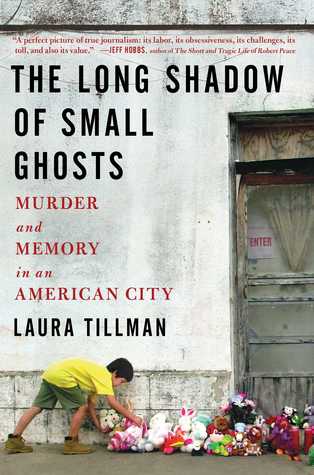
The Long Shadow of Small Ghosts by Laura Tillman
Publisher: Scribner. April 5, 2016.
Pages: 256
Genre: Nonfiction
Source: Publisher


ADD TO GOODREADS

BUY FROM INDIEBOUND

BUY FROM BOOK DEPOSITORY
In Cold Blood meets Adrian Nicole LeBlanc’s Random Family: A harrowing, profoundly personal investigation of the causes, effects, and communal toll of a deeply troubling crime—the brutal murder of three young children by their parents in the border city of Brownsville, Texas.
With meticulous attention and stunning compassion, Tillman surveyed those surrounding the crimes, speaking with the lawyers who tried the case, the family’s neighbors and relatives and teachers, even one of the murderers: John Allen Rubio himself, whom she corresponded with for years and ultimately met in person. The result is a brilliant exploration of some of our age’s most important social issues, from poverty to mental illness to the death penalty, and a beautiful, profound meditation on the truly human forces that drive them. It is disturbing, insightful, and mesmerizing in equal measure. -Goodreads

This is a true crime book for people who don't read true crime. If you go in expecting a lot of details about the murder of three children by their parents or the court case, you're going to be disappointed. Rather, this is an unflinching look at class and poverty in America, and some of its subsequent effects on communities. It's like classy true crime with a social justice bent. But there is totally a chapter titled "Don't Read This Chapter before Going to Bed."

We invest dollars and moments in one place over another. We identify the lessons that might be learned by a new generation, celebrate certain leads and achievements, and damn others. And as we forget, we destroy. It is a silent violence.

Tillman's journey started as she reported on a building that people wanted torn down. The building where three children were killed by John Allen Rubio and their mother Angela. Tillman looks at both the poverty and the sense of community in Brownsville, Texas which is on the very southernmost point of the state. In this border town, drugs are a problem and so is unchecked mental illness. Rubio claims that they killed their children because he believed they were possessed by demons. It's dark and it's complicated. So Tillman starts to talk to Rubio in prison to hear how he speaks about the situation, and eventually she meets him in person. No perspective that could be taken on this crime is left unresearched. And Tillman's writing is so good, and she's so excellent on honing in on what's important, that we're not left with a bloated, dense piece of detail-heavy work. I'm not good at reading nonfiction, but this book was impossible to put down. Definitely a page-turner.

This book doesn't try to answer questions for us. It doesn't break down the crime and explain exactly what happened and why. It shows us the grey areas. The grey areas in why this horrific crime took place. How multiple internal and external forces could have led to this event, and events like it throughout the country. In addition to asking us to look at a murderer as a constantly changing human being, it asks us what we're going to do about it. When somebody is sentenced to death, who is responsible and what does it mean?

I hadn't thought that much about the death penalty before, at least not critically. I knew I should think about it. I knew that I felt pretty against it, but I hadn't looked at the why's of that feeling. I'm grateful that Tillman went to the extent of actually talking to a reporter who has seen 400+ executions. It gave me a whole lot to think about in regards to the reality of the situation that I hadn't thought of before. Like how the execution is "an intentional death of a healthy person made to look more like the mercy killing of a sick dog or cat." And how there are witnesses to the execution, and the family of the victim often feel disillusionment toward the experience. It's a lot to take in, and it's important to take in.

...Acts do not exist in isolation in our world, and we can't expect to repair the misconduct of the past tidily, believing our response to be contained. We are connected--invisibly, intricately, marvelously, tragically--and those connections cannot be willed away. It would be satisfyingly simple to see an act as abominable as murder cured or avenged by putting the perpetrator of that crime to death. But the killings continue. They amp up--into school shootings, terrorist acts, war that rage for decades. The question is whether one death addresses another, or whether they circle into a frenzy.

Tillman does an excellent job at presenting many different arguments (about the death penalty, and about other things). She doesn't taint or rework them with her own opinion. She just offers her own incredibly intelligent questions and thoughts after the fact. I swear, I just wanted to type up entire paragraphs of this book in place of a review. The Long Shadow of Small Ghosts urged me to be more thoughtful, analytical, and open to accepting the grey areas.

A Bookish Chat & Review: The Lathe of Heaven

Friday, February 20, 2015

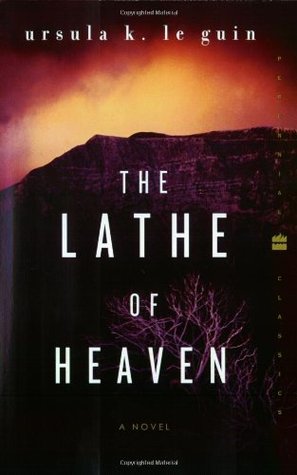
Here you will find a very unconventional/candid review of The Lathe of Heaven by Ursula K. Le Guin in two parts. Shaina of Shaina Reads and I did a buddy read of this sci-fi classic that has been on our TBRs for far too long!

The Lathe of Heaven is an exciting, original science fiction novel starring average dude, George Orr, in the near (but pretty dismal) future. George has a problem. His dreams change reality. Retroactively. And he's the only one who can recall both the old timeline and the new altered timeline. That is, until he is required to seek the help of psychologist, Dr. Haber. Will he help George or does he have a plan? What happens when somebody has the ability to play God?
Read on to find out what we thought of it and check out Part 2 here.

Sections with minor spoilers marked with a *


What We Thought:


Julianne:  wow
  I don't even know where to begin
Shaina I know! 
Julianne:  I guess, first of all, how many stars?
  as basic as it gets
Shaina:  hm
  currently flipping through my copy to get my bearings again
Julianne:  well did you love it or really like it?
  without thinking
  gut reaction
Shaina:  I would say a really like it
  definitely a 4, trying to determine if it's 4.5
  ^ courtesy of my guts
Julianne:  haha
Shaina:  it was one of the most original stories I've read
Julianne:  agreed
  it felt so fresh despite being from the 70s
  or 60s? I think 70s
Shaina:  I'm having a hard time thinking of another to compare it to


Our Le Guin Experiences:


Julianne: was this your first Le Guin?
Shaina:  yes!
  I've been told I should read her by a few people, especially the Oregonians in my life
  (my boyfriend is from there)
Julianne:  haha of course
Shaina:  you?
Julianne:  It was my first novel of hers. I read one short story, though.
  I had many people telling me to read this book, though
  and this was infinitely better than the short story I read
Shaina: I'm glad this one was better
  it definitely made me want to read more by her
  especially The Left Hand of Darkness
Julianne: what's that about?
Shaina:  that's a fantastic question, I'm not sure
  but it's been recommended to me a lot
Julianne:  haha that's how I felt about this book
Shaina:  yeah, I feel like I remember reading you say you'd been gifted multiple copies?
Julianne: haha yeah
  one from my grandpa when I was like 13, one from my friend who killed it on Jeopardy like last  year
  as a birthday present, I believe
  and I trust every recommendation of his
  so I was like ok it's probably time...in a year
Shaina:  I would too, if he's a jeopardy master


On Le Guin's Predictions Of The Future:


Shaina: I was actually really surprised by how spot-on some of Ursula's predictions were.
  obviously earth hasn't been wrecked by climate change, but we're definitely starting to feel its effects
Julianne:  yeah, she pinpointed the problems that have definitely become bigger issues
  but she still didn't predict cell phones
  it seems like the little things are hard for sci fi writers to get right
Shaina:  hahaha, yes 
Julianne:  they're either way overblown chip-in-head technologies
  or like way too similar to how things were
Shaina:  yeah, I couldn't help but thinking of the Augmentor as this like
  super 70s/80s gargantuan computer
  or like something very advanced but dated-looking, like in old sci-fi TV
Julianne:  Oh my god the parking ramp converted buildings are too funny.
Shaina:  I really really want to know what pseudobooze is like.


*On Controlled Violence:


Julianne: the controlled violence was very scary
  the palace of sport?? the citizens arrest/eugenics/WHAT
Shaina:  YEAH
  like, how is this improvement
Shaina:  interesting that they eradicated cancer through eugenics
  like, pretty sure that's not how that works
  but ok
Julianne:  did they not just kill everyone with cancer once they found out?
  like it sounded like they were still eradicatING cancer
Shaina:  hmm, ok, that might make more sense
Julianne:  like that murder he witnessed
  they were like THIS DUDE HAS CANCER AND HE'S HIDING IT, WHO IS MY WITNESS
Shaina:  I feel like I remember a line where Haber said they'd eradicated the most common disease or something
Shaina:  of course I have no notes
Julianne:  they'd definitely eradicated some stuff
  idk it was a mess
  Haber fucked it
Shaina:  "Eliminated cancer as a major killer."
  yes, because you replaced it with HOMICIDE
Julianne:  hahaha yeah
  implemented PEOPLE as major killers


*On The Aliens:


Shaina:  I gotta admit, though, I'm still a little fuzzy on the aliens
  like, what was with their language and the words that helped George overcome Haber's hypnosis? why were they big turtles??
Julianne:  oh. oh yeah. the ending/the turtles is where I think maybe I'd veer 4.5 instead of 5 stars
  like it just seemed like maybe Ursula was trying to be funny?
  but then it got very serious with their language and how they understand the "effective dream" situation
Shaina:  right, I never fully digested that, the last bit
Julianne:  I don't know. I never really understood what they were trying to communicate even when George seemed to glean a lot
  it just felt a little rushed by the end
Shaina:  yeah, agreed. I liked them, and I think if we'd had a little more time/interaction with them, it would have made more sense
  but as is I just didn't get a good sense for them as characters
  I really enjoyed the alien shop proprietors, though
Julianne:  yesss. and after a while, I really liked the idea of them. I mean obviously them coming to earth was the shit. I definitely gasped.
Shaina:  like, "Do you wish an object." "Thanks, I was just looking." "Please continue this activity."
Julianne:  and they didn't know what they look like?
Shaina:  made me giggle
Julianne:  hahaha yes the interactions were great
  funny without making the story much less serious
  but I was also into how the turtle exterior was a suit
Shaina:  oh, yes! I forgot that they wore suits and that we don't actually know what they look like
Julianne:  and they talk out of their elbows?
Shaina:  yeah, man. I have no idea about that
  it was also interesting (and somewhat typical, I felt) that the humans were the ones to attack the aliens first, rather than try to communicate with them. Ursula's def down on humanity
Julianne:  well, in one reality that was the case
  do we know who attacked first when the aliens were aggressive for half a minute?
  it seemed like they were just smashing shit
  (I mean I still agree with you)
Shaina:  oh true! all these realities are tough to keep track of
Julianne:  also, SIDE QUESTION:
  if they were into the dream stuff, wouldn't they be able to not become a part of George's effective dreaming?
Julianne:  like if they're aware he created it
Shaina:  hmmmm
Julianne:  wouldn't they be like fuck this
  we've got shit to do that isn't running a thrift store?
  I don't know
Shaina:  right, and they've got that funky phrase that lets them peace out of it
Julianne:  it was all so vague with them that there are numerous questions
Shaina:  we should ask 85-yr-old Ursula to write us a book about the turtle aliens 

 --------------------------------------------- 

I hope you enjoyed reading that as much as we enjoyed talking about it! Check out part 2 of our conversation at Shaina Reads.


Review: No One Belongs Here More Than You: Stories by Miranda July

Friday, March 29, 2013

No One Belongs Here More Than You: Stories by Miranda July
Publisher: Scribner. March 2008
Pages: 205
Genre: Literary fiction, short stories
First Line: It still counts, even though it happened when he was unconscious.


ADD TO GOODREADS

BUY FROM INDIEBOUND

BUY FROM BOOK DEPOSITORY


Miranda July's short stories are beautiful and startling. I had only read one of her stories, Shared Patio, which is the first story in the book, and I didn't like it quite as much as I thought I should. All of the other stories I adored, though. Most of them involve love or relationships in some sense, but often in surprising ways. There are characters in love with best friends, characters who try to seduce those who are too young, concerning sibling relationships, surprise homosexuality, imaginary relationships, and more.

What's most exciting about these stories isn't their quirky content, though. It's how personal and small most of these instances are. Many of the stories are incredibly small, both in length and in the moment being recorded/created. You see private, sometimes what one would expect to be mundane, instances. And they turn incredibly beautiful when you allow yourself to look at these often unseen moments.

Miranda July's style is clean and crisp, making this book of short stories a quick read. If you're annoyed by a trendy lack of quotation marks, be warned, you will find no ""s here. Most of the stories feel like a stream of consciousness, but I recall at least one story being more detached from the main character. I often would stop reading to turn to a friend and read parts and whole stories aloud. It's absolutely a book that I'm going to want to buy and revisit.

For a more specific review, and to be used as a taster, here's a very very short story from the collection called This Person. This story really got to me. Despite its length, it gets a very emotional response from me, which always impresses me with short stories. The ending is sort of painful, because I think July catches a very human behavior of withdrawing from others. It's hard to see it happen, because it's easy to recognize this behavior in ourselves. We want the main character to be better than ourselves. Any short story that moves me and leads me to do some amount of self reflection is good in my book.

Some Quotes:

"It's not agoraphobia, because I am not actually afraid of leaving the house. The fear hits about twenty-seven steps away from the house, right around the juniper bush. I have studied it and determined that it is not a real bush, and I have reversed this theory, and I have done everything I can not to turn around and go home, even if it means standing there forever." - The Boy from Lam Kien

"We don't know anything. We don't know how to cure a cold or what dogs are thinking. We do terrible things, we make wars, we kill people out of greed. So who are we to say how to love. I wouldn't force her. I wouldn't have to. She would want me. We would be in love. What do you know. You don't know anything. Call me when you've cured AIDS, give me a ring then and I'll listen." - The Sister

Outlandishness Rating: 7.5/10   

The atypical sexual relationships and peculiar logic held by the characters get this collection of stories a 7. The story about teaching people to swim without a pool, alone, gives it an extra half a point. Pretty weird, but not the weirdest.

Recommended For:

Anybody who likes strange little contemporary stories. They're quirky and unabashedly personal. Highly recommended.

Share

Related Posts Plugin for WordPress, Blogger...