Outlandish Lit

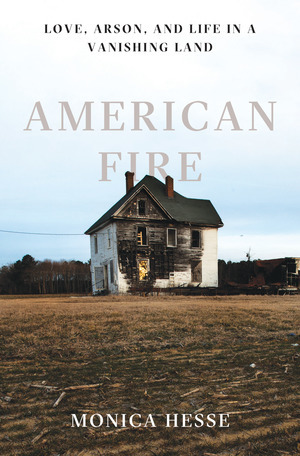
American Fire by Monica Hesse :: Review

Monday, August 7, 2017

American Fire by Monica Hesse :: Outlandish Lit Review
American Fire by Monica Hesse
Publisher: Liveright. July 11, 2017.
Pages: 255
Genre: True Crime
Source: Publisher


ADD TO GOODREADS

BUY FROM INDIEBOUND

BUY FROM BOOK DEPOSITORY


What a true crime time to be alive! Podcasts and shows focused on real murders are super popular right now. But let us not forget an equally fascinating crime, the object of Sia and Rihanna's affection (or, at least, attention) in several music videos: arson! What else is super popular? The examination of rural American life. This book gives you both, with a side of thorough research and beautiful writing. American Fire is the story of Accomack county in rural Virginia that in 2012 was victim to 67 fires within a five-month period. It's the story of the two people, crazy in love, who set 67 (mostly) abandoned buildings ablaze undetected, and why.

"I spent the next two years trying to understand why he did it. The answer, inasmuch as there is an answer for these things, involved hope, poverty, pride, Walmart, erectile dysfunction, Steak-umms (the chopped meat sold in the frozen food aisle) intrigue, and America. America: the way it's disappointing sometimes, the way it's never what it used to be."

The narrative that Washington Post feature writer Monica Hesse has wrangled is complicated, yet extremely coherent and compelling. We learn a lot about firefighting and the investigation of arson. Seriously, I had no idea I would be so interested in learning about volunteer firefighting and its impact on a community. Hesse includes historical and psychological examinations of arsonists, as well as an analysis of the area’s economic situation. Accomack County is an isolated place under pressure from the rest of society to change. The ways that the residents made money are no longer profitable or no longer exist. Many of the residents feel forgotten. To then be betrayed by somebody in the community, who remains unidentified for so long, is an impossible struggle.

Hesse also looks at what people will do when they are deep in love and under a considerable amount of stress. Charlie Smith, the man who pleaded guilty to the fires, is a fascinatingly earnest and troubled person. More fascinating is his girlfriend, Tonya Bundick, and the dark shift that took place in their epic love story. This is great true crime, featuring details about the arsons, interrogations, and trials, with a “This American Life” tone of storytelling. If you have an interest in true crime, but haven't read a true crime book, this is a great place to start.
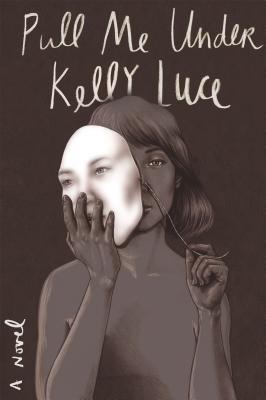
Pull Me Under by Kelly Luce :: Review

Wednesday, December 7, 2016

Pull Me Under by Kelly Luce :: Outlandish Lit Review
Pull Me Under by Kelly Luce
Publisher: FSG. November 1, 2016.
Pages: 272
Genre: Literary Fiction
Source: Publisher


ADD TO GOODREADS

BUY FROM INDIEBOUND

BUY FROM BOOK DEPOSITORY
Kelly Luce's Pull Me Under tells the story of Rio Silvestri, who, when she was twelve years old, fatally stabbed a school bully. Rio, born Chizuru Akitani, is the Japanese American daughter of the revered violinist Hiro Akitani--a Living National Treasure in Japan and a man Rio hasn't spoken to since she left her home country for the United States (and a new identity) after her violent crime. Her father's death, along with a mysterious package that arrives on her doorstep in Boulder, Colorado, spurs her to return to Japan for the first time in twenty years. There she is forced to confront her past in ways she never imagined, pushing herself, her relationships with her husband and daughter, and her own sense of who she is to the brink. -Goodreads

If you've been to Japan, you will enjoy reading this book. If you want to feel like you've been to Japan, you will also enjoy reading this book. At the beginning, you're immediately drawn in. Half Japanese, half American girl Chizuru kills her school bully - SO JAPANESE. We see her at that time and we see her later as a pretty well-rounded, stable adult. But when she learns that her father who abandoned her has died, she decides to go to Japan by herself. And that's when all sorts of pent up stuff bubbles up to the surface. Rio/Chizuru has a lot of stuff to figure out about herself that she has been ignoring. Even though this book is about someone who murdered their school bully, the vast majority of it felt like a road trip book (on foot). Luce is excellent at capturing how it feels to be in Japan. It was a complete delight for me, because I went there so recently. And there are some pretty interesting characters that are introduced once Rio arrives.

My mom hated the misogyny she witnessed in Japan. She'd ranted about Miura-san ogling her in his office to Hiro, who only shrugged. It didn't seem like a big deal to me at the time--I'd have loved to be thought pretty like my mom was. I noticed the stereotypes when I got older, for a different reason: people were always surprised when they learned that Tomoya's killer was female. As if a girl couldn't feel rage, couldn't be brutal.

Because I was having so much fun vicariously being in Japan again, I had to force myself to take a step back and see how the book was actually doing plot-wise. And, to be honest, much of it felt just like things were just happening for things to happen. Often there were strained interactions between characters that seemed unrealistic. Like a character bails on a planned dinner with Rio to go on a pilgrimage to different temples and Rio runs into her before she gets a chance to bail. What does she do? Insists she go with her. I get that the intent was to show how awkward and unaware Rio was being, but there are a lot of strangely motivated choices like this. Things sometimes felt like they were coming out of nowhere, because we didn't get as close to the characters as we could have.

I think Pull Me Under edged into some really important and interesting questions about personal identity and whether or not people can change - and what that change could look like. It dealt with some dark themes that I would've liked a deeper look at. I wanted to know more about Rio's mother's suicide. I wanted to know more about what was going through Rio's head during a death that happens halfway through the book. There were a ton of moments that looked like opportunities for big things to be revealed, but sometimes there was no follow through. Like we walked up to the gates of this potential new information, then we walked away randomly. It was a little jarring a couple of times. Though the pacing and plot structure were both a little uneven, Kelly Luce is quite a good writer and at no point did I want to stop reading. Not bad for a debut novel.


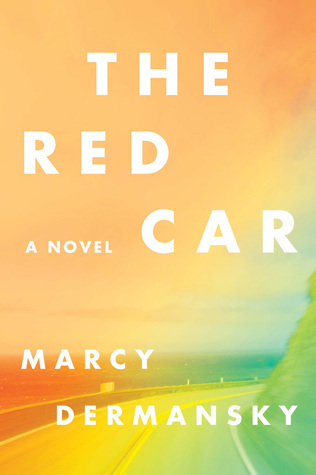
The Red Car by Marcy Dermansky :: Review

Friday, November 4, 2016

The Red Car by Marcy Dermansky :: Outlandish Lit Review
The Red Car by Marcy Dermansky
Publisher: Liveright. October 11, 2016.
Pages: 208
Genre: Literary Fiction
Source: Publisher


ADD TO GOODREADS

BUY FROM INDIEBOUND

BUY FROM BOOK DEPOSITORY
Leah is living in Queens with a possessive husband she doesn’t love and a long list of unfulfilled ambitions, when she’s jolted from a thick ennui by a call from the past. Her beloved former boss and friend, Judy, has died in a car accident and left Leah her most prized possession and, as it turns out, the instrument of Judy’s death: a red sports car.

Judy was the mentor Leah never expected. She encouraged Leah’s dreams, analyzed her love life, and eased her into adulthood over long lunches away from the office. Facing the jarring disconnect between the life she expected and the one she is now actually living, Leah takes off for San Francisco to claim Judy’s car. In sprawling days defined by sex, sorrow, and unexpected delight, Leah revisits past lives and loves in search of a self she abandoned long ago. Piercing through Leah’s surreal haze is the enigmatic voice of Judy, as sharp as ever, providing wry commentary on Leah’s every move. -Goodreads

The Red Car was totally not what I expected. Honestly, the publisher blurb makes it sound like a borderline Eat Pray Love journey of self discovery featuring a constant soundtrack of Natasha Bedingfield. Luckily for us, that is SO not what this book is. It is much weirder than that. If you like the straight forward, quirky, honest sense of humor of Miranda July and/or the sparse, powerful writing of Lydia Davis, this is the book for you. And that's exactly why it was the book for me.

The mechanic leaned over and tried to kiss me.
I took a step away. I realized I was in a high place. I could actually fall. I sadly shook my head. It seemed unfair. After Lea. After Diego. But I did not want to kiss the mechanic.
"A guy has to try," he said.
"No, you don't," I said quiety.

I don't want to say much about the plot. Leah had a boss who she had a close bond with, then Leah moved away. Her boss, Judy, wanted her to succeed. Leah ends up married to an awful guy who seems benign and she is mostly complacent. She hadn't spoken to Judy in years, and one day she is shocked to find out that Judy is dead. And Judy left her the red car that she loved and that Leah hated (also the car that Judy died in), in addition to something else. A thing happens that makes Leah 100% decide to fly to San Francisco by herself. And then some weird stuff goes down. I WISH I could say more, but I can't. Just know that it is a tightly written story and a quick, enjoyable read. I laughed a lot, I also cried. It's dark. And, again, it's WEIRD. There were some sexy times in the book which is normally horrifying for me (I'm not a prude at all, but sex scenes make me blush too much), but it was done perfectly and never felt gratuitous.

The writing is the best part of this book, and I don't mean that in a bad way like as if other things were lacking. I mean that it was well written on all fronts. Real emotion and thought was evoked. Intelligent, contemporary, and completely on point. I need to read every other word Marcy Dermansky has ever written.

Scratch by Steve Himmer :: Review

Thursday, October 20, 2016

Outlandish Lit's Scratch by Steve Himmer ReviewScratch by Steve Himmer
Publisher: Dark House Press. October 11, 2016.
Pages: 200
Genre: Literary?? Supernatural mystery??
Source: Publisher


ADD TO GOODREADS

BUY FROM INDIEBOUND

BUY FROM BOOK DEPOSITORY
Martin Blaskett moves to a small town to oversee construction of a housing development, where he encounters a shape-shifting figure from local legend—Scratch. He is taken under the wing of his new neighbor, a retired hunting guide named Gil Rose, and befriends a local woman named Alison. Along the way, trouble ensues as Scratch feels threatened by changes to the landscape, luring locals out into the woods, including Alison’s son. As the blame for a range of events falls at Martin’s feet, he is beset by increasingly inhuman dreams, and comes to doubt his own innocence. A literary novel of wilderness noir that engages the supernatural elements of folklore in the manner of magical realism, Scratch explores the overlapping layers of history, ecology, and storytelling that make up a place. -Goodreads

Scratch had just about everything I want in a book. A forest with more going on in it than we know? Check. Mysterious disappearances? Check. Weird animal stuff? Check. A formless shapeshifting narrator who puts our main character in harm's way for the sake of the story he wants to create? Ok, maybe I didn't explicitly want that, but I got it. Scratch's concept is pretty brilliant. A shapeshifter (named Scratch) has lived in a forest in the middle of nowhere since...forever, basically. At first he didn't have a form at all, but then he tried turning himself into animals to live like them and, hey, it worked! Scratch is both a protector and a mischief maker, and we get the opportunity to hear this story from his point of view. This novel gives a whole lot of credit to animals, nature, and dreams, which I love.

"We found something," she says. "In the first hole."
"Found what?"
"Bones, Mr. Blaskett. We just started digging, and the ground's full of bones."

Martin, the main character, is a hapless man who doesn't have a lot going on in his life apart from his house constructing/real estate career. He decides to build a collection of homes in a very small town and in the back of his head he has the idea that he will move there and get away from the city too. He interacts with very few people other than Gil, the hunter across the road who is a delight, and Alison, the woman he's hired to oversee the construction of the houses. One day, he follows a fox into the forest and he can't seem to stop himself. He gets horribly lost and ends up sleeping in the woods, only to be awoken by a bear attacking him. That's where it all begins. The animals acting strangely, the surreal dreams Martin has about the wild, and people in the town beginning to disappear. Martin is somehow connected to all of it, and of course Scratch, the local legend, has something to do with it.

This book is only very slightly creepy. It was slow going at some points, and we spend perhaps too much time in Martin's head thinking about his past (living with a neglectful single mother) and the borderline stereotypical issues that past brings up. I wouldn't have minded had the book gotten a little bit weirder than it did, but that's obviously just a personal preference. I really enjoyed the concept and the idea of the ending, but it lacked a little in execution and consequence. There was nothing bad about this book, but the plot could have packed a little more of a punch for where the characters all end up.

I didn't begin as one of your own who was cursed--I was in these woods without form before the first warm-blooded body appeared. I was here before your kind arrived, before any kind arrived, because you needed me here to become what you are. You needed a reason to raise up the walls you hoped would keep me out, and to invent the electric lights and alarms that allow you to sleep through the night. Without me to spur your inventions, what would your kind have become? What would your languages be without the need to give your fear names?

Children of the New World by Alexander Weinstein :: Review

Tuesday, September 20, 2016

Children of the New World by Alexander Weinstein :: Outlandish Lit Review
Children of the New World by Alexander Weinstein
Publisher: Picador. September 13, 2016.
Pages: 240
Genre: Short Stories
Source: Publisher


ADD TO GOODREADS

BUY FROM INDIEBOUND

BUY FROM BOOK DEPOSITORY
Children of the New World introduces readers to a near-future world of social media implants, memory manufacturers, dangerously immersive virtual reality games, and alarmingly intuitive robots. Many of these characters live in a utopian future of instant connection and technological gratification that belies an unbridgeable human distance, while others inhabit a post-collapse landscape made primitive by disaster, which they must work to rebuild as we once did millennia ago.
Children of the New World grapples with our unease in this modern world and how our ever-growing dependence on new technologies has changed the shape of our society.-Goodreads

I haven't been this excited about reading a book in what feels like forever. I knew that I'd like this collection of short stories. It was pitched to me as akin to the TV show Black Mirror, which I absolutely loved. And they weren't wrong about that. Here we have a collection of stories that are all speculative. Set in the very near future, things are just a little different from how they are now. People are a little more hooked into technology, the environment is more fucked, etc. Our scenarios are set up quickly and with apparent ease, and we then get to see normal people interacting with each other in these worlds. The result is at times funny, at times devastating, often both. Weinstein provides riveting stories about being human as well as biting commentary on our world. In the stories, we've got robotic siblings to help out with biological children, and what you do when they malfunction. Enlightenment as a drug (Moksha). Manufactured memories. Support groups for the loss of virtual children. It's all so good, and none of it feels wildly off base from where we are as a society right now.

Moksha, it turned out, wasn't bullshit. It'd just gone into hiding ever since the twenties when the U.S. cracked down on Nepali distribution. There had been nonstop busts at yoga studios and health spas in the U.S. An oxygen bar in Sedona had been found with makeshift crown plates hooked up to an old Sega Genesis console.

I really emphatically enjoyed this whole collection. The only thing keeping me from loving it unconditionally is the fact that none of the stories have a female main character and none of them pass the Bechdel test. To be fair, two of the stories have weird formats and don't actually have a character. One of the shorter stories never specifies the gender. But it was still disappointing. I get if you're somebody who writes about a certain thing. I do. But to both 1) not take up the challenge to write about somebody different from you, or 2) not see females as "just another kind of person" that should be relatively easy to write about because, again, they are just another kind of person, is a disappointment. If the plots of the stories weren't so intriguing, I probably would've begun to find the "wearied male trying to make his family/life work" character that reappeared in most of the stories boring.

It was Rocket Night at our daughter's elementary school, the night when parents, students, and administrators gather to place the least-liked child in a rocket and shoot him into the stars.

Truly, though, that is my only qualm with the book. I want everyone to read these stories, but my point above is something to be aware of and think about. This is one of the most consistently solid collections of short stories that I've read in a while. I've actually sat and read them aloud to people, they're so good. Dark, cleverly written, and brilliantly imagined. I laughed and I cried. Alexander Weinstein gets it. He fucking gets it. And, if you were wondering, my favorite story was "The Cartographers."

"I'm afraid all of your family is corrupted," the supervisor told me. "You'll just end up bringing the virus with you. It's an easy process to reboot. Simply hold down the power button on your console for twenty seconds and--"

"These are my children!" I yelled.

"If it's any consolation, they won't feel a thing; they're just data."

Where We Go When All We Were Is Gone by Sequoia Nagamatsu :: Review

Thursday, September 8, 2016

Where We Go When All We Were Is Gone by Sequoia Nagamatsu
Publisher: Black Lawrence Press. May 2016.
Pages: 166
Genre: Short Stories
Source: Publisher


ADD TO GOODREADS

BUY FROM INDIEBOUND

BUY FROM BOOK DEPOSITORY
“The Return to Monsterland” opens 'Where We Go When All We Were Is Gone,' a collection of twelve fabulist and genre-bending stories inspired by Japanese folklore, historical events, and pop culture. In “Rokurokubi”, a man who has the demonic ability to stretch his neck to incredible lengths tries to save a marriage built on secrets. The recently dead find their footing in “The Inn of the Dead’s Orientation for Being a Japanese Ghost”. In “Girl Zero”, a couple navigates the complexities of reviving their deceased daughter via the help of a shapeshifter. And, in the title story, a woman instigates a months-long dancing frenzy in a Tokyo where people don’t die but are simply reborn without their memories.

Every story in the collection turns to the fantastic, the mysticism of the past, and the absurdities of the future to illuminate the spaces we occupy when we, as individuals and as a society, are at our most vulnerable.-Goodreads

Reading this collection of short stories rich with magical realism was such a delight while I was in Japan and afterward. For months beforehand, I had been watching a lot of Japaneses TV and listening to a lot of Japanese podcasts to work on listening comprehension. One of the things I watched was a kids shows that told simplified, cartoonized Japanese folktales. So as I read this book, there were a lot of moments where I already knew the story it was based on and I feel like I got more out of some of them. But, at the same time, there were several things that were very surprising to me (such as the long neck demon Rokurokubi, which is probably even more unsettling than it sounds). Both situations were fun to be in. Each story dives headfirst into a creatively imagined world where something from Japanese popular culture (i.e. Godzilla) or folklore (i.e. the kappa) is real. I loved this book for its fearlessness and its strangeness.

As is expected with short story collections, there are going to be some that are better than others. The ones that were good were really good. I think Girl Zero would have to be my favorite, due to how much gasping I did while reading it. There are a lot of moments of beauty throughout. But, unfortunately, a few of the stories fell kind of flat despite their interesting concepts. In a couple I just wasn't 100% sure why I was reading what I was reading, which isn't a great feeling to have. The stories that are good are magical and creepy and funny. It would be a shame for anybody interested in Japanese folklore and popular culture to miss out on these tales.

Sidenote: I went to Sequoia Nagamatsu's reading which was a ton of fun with a big crowd, but I was sad to find out that he had other readers there because that meant he only read one story, and it wasn't a favorite. I wanted him to read more!! Oh, also I won a big stuffed Godzilla at the reading, so I'm pleased. And this does not affect my review at all because it was a random raffle and I need my bribery to be more direct than that.

My favorite stories:
1. // Girl Zero
2. // Rokurokubi
3. // The Peach Boy
4. // The Inn of the Dead's Orientation for Being a Japanese Ghost


The Natural Way of Things by Charlotte Wood :: Review

Tuesday, August 30, 2016

The Natural Way of Things by Charlotte Wood :: Outlandish Lit's Review
The Natural Way of Things by Charlotte Wood
Publisher: Europa Editions. June 28, 2016.
Pages: 230
Genre: Literary
Source: Publisher


ADD TO GOODREADS

BUY FROM INDIEBOUND

BUY FROM BOOK DEPOSITORY
Drugged, dressed in old-fashioned rags, and fiending for a cigarette, Yolanda wakes up in a barren room. Verla, a young woman who seems vaguely familiar, sits nearby. Down a hallway echoing loudly with the voices of mysterious men, in a stark compound deep in the Australian outback, other captive women are just coming to. Starved, sedated, the girls can't be sure of anything—except the painful episodes in their pasts that link them.

Charlotte Wood depicts a world where a woman's sexuality has become a weapon turned against her. The characters, each marked by their own public scandal, are silenced and shackled by a cruel system of corporate control and misogyny. In a Kafkaesque drag of days marked only by the increasing strangeness of their predicament, the fraught, surreal, and fierce reality of inhabiting a female body becomes frighteningly vivid.-Goodreads

I went into this book completely expecting to love it. It won the 2016 Stella Prize, a prize for Australian fiction & non-fiction written by women. I was more than ready to be blown away. So many people I trust rated this 4 to 5 stars. And, let's be real, it's completely in my wheelhouse. The best way I've heard it described is as "feminist horror." Women who have been involved in sexual scandals (mistresses, rape victims, etc.) are gathered up and taken to a range in the middle of nowhere where they're treated like animals basically. I'm so there for feminist allegory. I'm not squeamish about graphic stuff. And, still, this book did not completely work for me.

Wood's writing is quite good. I loved any description of the outback of Australia. But no matter how much I wanted to love this story, I felt like I was often pushing to continue it. It didn't feel especially compelling to me. And then there was the ending. I won't go into details, but I will just say that I'm totally fine with open endings! I don't need all the questions answered. But the whole time I was reading, I was waiting for a real wow moment that would turn it into a 5 star read for me and it never happened. Even if a novel is full of rich, important metaphors, it's still crucial to have a solid story that carries those metaphors. A story that keeps the reader reading and gives the metaphors context. The mystery about what exactly was going on was completely intriguing! But I didn't get the payoff I expected after all the build up. It's difficult to leave everything open and also be a metaphor heavy novel, because the points you're trying to make won't have enough support to leave a lasting impression on the reader. Surely, one of the main points made at the very end about what happens to the women involved in these events is important, but it wasn't a new idea for me. It was very much something I had thought about before. So if that was where the wow was, it didn't affect me in a strong way. Maybe it will for other readers.

Would it be said they were abandoned or taken, the way people said a girl was attacked, a woman was raped, this femaleness always at the center, as if womanhood itself were the cause of these things? As if the girls somehow, through the natural way of things, did it to themselves.

There are so many good moments in this book. I will never hear Adele's Rolling in the Deep and not think of this book. I'll also never see rabbits the same way again. A couple times, I was very very tense. The women in this book face a lot of depravity that might be hard for some to read. There aren't any graphic depictions of rape, though, so that's good! It's just sort of mentioned in passing a couple times. It was definitely less graphic of a book than I thought it would be going in, which was a nice surprise.

I'm glad that this book was written. There's a lot of anger to be had about the patriarchy and I'm glad we're having it openly. I'm glad a talented author like Charlotte Wood is getting readers. This is a way to create change. There was just a little too much hype for me with this book, and it fell a little flat. I still applaud Charlotte Wood and hope to read more of her novels in the future.

'What about this!' From Lydia: the Pavilion at Maroubra on a hot day, watching the surfers moving across that rich greeny ocean, a Skinny Dip in your hand, and a huge plate of fish and chips.
They groaned. Hot chips.
'And a hot guy!' yelled Barbs.
They murmured again, out of politeness, but it was the chips that stayed in the mind.

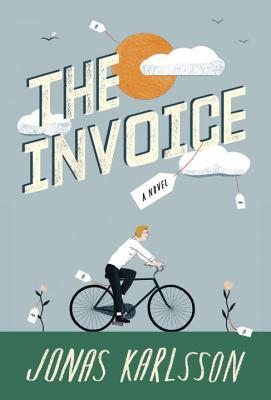
The Invoice by Jonas Karlsson: Review

Friday, July 22, 2016

The Inovice by Jonas Karlsson :: Outlandish Lit Review
The Invoice by Jonas Karlsson
Publisher: Hogarth. July 12, 2016.
Pages: 208
Genre: Literary
Source: Publisher


ADD TO GOODREADS

BUY FROM INDIEBOUND

BUY FROM BOOK DEPOSITORY
A passionate film buff, our hero’s life revolves around his part-time job at a video store, the company of a few precious friends, and a daily routine that more often than not concludes with pizza and movie in his treasured small space in Stockholm. When he receives an astronomical invoice from a random national bureaucratic agency, everything will tumble into madness as he calls the hotline night and day to find out why he is the recipient of the largest bill in the entire country.-Goodreads

This tiny book is so sweet and charming, and that's coming from somebody who thinks horror movies pussyfoot around opportunities to kill off child characters. So it's not cheesy, dopey, or annoying in any way. It was just a very nice time to read. Jonas Karlsson wrote one of my favorite funny books, The Room, and while The Invoice isn't hilarious, it is equally quirky. And equally focused on the ridiculousness of bureaucracy. Karlsson knows what he likes. Or, I guess, hates in this case.

Our unnamed protagonist is confronted with a 5,700,000 Swedish kronor (~658,000 USD) invoice, which he soon learns is the cost of all the happiness he's experienced in his life. Despite being a guy with very little going on in his life -- a part time video store job, no financial responsibilities, little family, one friend -- he has one of the largest bills in the country. We follow him as he tries to find out why his invoice is so enormous. He calls up the agency and speaks with a representative on the phone to try to figure out what happened, and he finds himself getting closer and closer to the woman on the other end.

With some reluctance, I had to admit that I was pretty happy with my life.

This book was a very quick, fun read. At first, our hero seems like a pretty miserable, lazy nobody, but he has a spectacular ability to appreciate the little things in life. As we learn more about the events that have taken place in his life, both the main character and the reader learn a lot about perspective. His capacity for contentment is both admirable and inspiring, at least to somebody like me who is all sorts of restless.

There are some really excellent moments in this book. A couple of them near the end gave me shivers. Some of it felt repetitive, however, and I feel like The Invoice could have stood to be shorter than it was. All in all, though, I had fun reading it.


So Much for That Winter by Dorthe Nors: Review

Thursday, June 23, 2016

So Much for That Winter by Dorthe Nors
Publisher: Graywolf. June 21, 2016.
Pages: 147
Genre: Literary Fiction
Source: Publisher


ADD TO GOODREADS

BUY FROM INDIEBOUND

BUY FROM BOOK DEPOSITORY
Dorthe Nors follows up her acclaimed story collection Karate Chop with a pair of novellas that playfully chart the aftermath of two very twenty-first-century romances. In "Days," a woman in her late thirties records her life in a series of lists, giving shape to the tumult of her days--one moment she is eating an apple, the next she is on the floor, howling like a dog. As the details accumulate, we experience with her the full range of emotions: anger, loneliness, regret, pain, and also joy, as the lists become a way to understand, connect to, and rebuild her life.
In "Minna Needs Rehearsal Space," a novella told in headlines, an avant-garde musician is dumped via text message. Fleeing the indignity of the breakup and friends who flaunt their achievements in life, career, and family, Minna unfriends people on Facebook, listens to Bach, and reads Ingmar Bergman, then decamps to an island near Sweden, "well suited to mental catharsis."  -Goodreads

Ever since reading her collection of stark short stories, Karate Chop, I've been looking forward to more of Danish author Dorthe Nors' work being translated to English. And So Much for That Winter is beyond exciting, because it's two longer pieces that both specifically highlight the magic that Nors can create in her terse sentence styling. She accomplishes so much while saying so little and it never ceases to stun me. So on to the two novellas that make up this collection (if two of something makes a collections, that is).


MINNA NEEDS REHEARSAL SPACE

Minna and Karin took a class together.
Karin latched onto Minna.
Minna is somewhat of a host species.

First of all, I don't think I've ever related to a sentence more than I have that last one. Anyway, that's beside the point. Minna Needs Rehearsal Space is my favorite of the two novellas -- I loved it. I loved it so much that I feel comfortable saying just read this one, you don't even need to read Days. But more on that later.

Grown-ups are kids who have lots to hide.

This story is written in a series of headlines, because the man who just broke Minna's heart is a reporter. And it's brilliant. It sounds like it would be dull to read, but it's both incredibly readable and it commits extraordinary acts of beauty. Narrator, Minna, breaks modern day life and love into small simplistic bits that will make you laugh and tear up and be amazed at how Nors has managed to capture how it feels to be a human today. Constantly clever and moving, this novella carries a strong plot with memorable (needy, horrible) characters you've most likely seen before in your life.

If you're a fan of Jenny Offill's Dept of Speculation or Edouard Leve's Suicide, seek this one out.

Jette's erotic.
Jette calls her boyfriends lovers.
Jette's boyfriends are married to other women.


DAYS

I love Nors and I want to love everything she ever does and I don't want to say anything bad about any part of So Much for That Winter, but I didn't love Days. Though similarly written, this time in the form of lists, it was the opposite in that it did not feel as compulsively readable. I mean it was easy to read, but I didn't want to read it that badly. The main character is a writer who doesn't actually seem to have a job who is going through some vague struggle and we get to see her day to day actions and thoughts. If at any point I was given a reason to care about the main character, it may have been interesting. But for the most part I was just wondering if I would figure out what was going on and then was disappointed when I didn't really.

1. Woke an hour early
2. made instant coffee, 

3. drank it, 

4. stood by my kitchen window the same way I stood by my kitchen window when I lived on the island of Fanø and went down to the beach every day and crushed razor shells underfoot: Why do I live here? I’d wondered 

5. and couldn’t have known that one day I would stand in a flat in Valby and look at the crooked tulips in the backyard and wonder the same thing.

There are definitely good moments in it. I enjoyed some of the narrator's thoughts. But I also wished the lists could have been focused and actually functioned as lists or had some sort of visible reasoning. But some of the lists, unlike the one shared above, didn't have any sort of verb so it wasn't like a list of each thing she did. I don't know. I was just unclear about the whole thing the whole way through. So much for that novella, right?

Maybe there's something I just didn't pick up on, but I personally recommend Minna Needs Rehearsal Space (luckily the longer of the two) and can give only give a shrug and an "it was ok I guess" to Days.

I think So Much for That Winter is worth getting just for Minna, I feel that strongly about the novella.

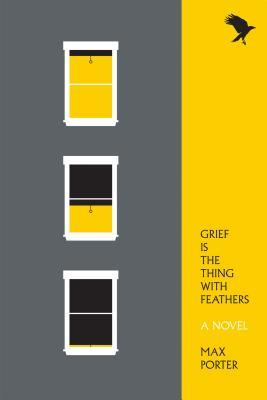
3 Things "Grief Is the Thing with Feathers" Got Right About Grief

Saturday, June 11, 2016

3 Things "Grief Is the Thing with Feathers" Got Right About Grief :: Outlandish Lit's Review
Grief Is the Thing with Feathers
Publisher: Graywolf. June 7, 2016.
Pages: 128
Genre: Literary Fiction
Source: Publisher


ADD TO GOODREADS

BUY FROM INDIEBOUND

BUY FROM BOOK DEPOSITORY
In a London flat, two young boys face the unbearable sadness of their mother's sudden death. Their father, a Ted Hughes scholar and scruffy romantic, imagines a future of well-meaning visitors and emptiness.

In this moment of despair they are visited by Crow - antagonist, trickster, healer, babysitter. This self-described sentimental bird is attracted to the grieving family and threatens to stay until they no longer need him. As weeks turn to months and physical pain of loss gives way to memories, this little unit of three begin to heal. -Goodreads

Without thinking about it, I read Max Porter's debut Grief Is the Thing with Feathers really, really close to Father's Day. For the past 12 years I've been coping with the loss of my father. It's been a long journey of trying to acknowledge it, then trying desperately not to acknowledge it, and eventually trying to find my way back to the experience through writing about it. It's always been something with me, constantly changing me, whether I was willing to accept it or not.

Through its fable-tones, strange format, and fragmented stream-of-consciousness writing (think Dept. of Speculation), this book is the closest I've ever read to capturing the feelings of grief. We get to be in the head of the father, the kids, and the magical Crow who inhabits their home. The death of the mother in this family shifts them into an entirely new world that nobody else can touch.

1. // You're constantly trying to rationalize the loss.

After the advent of laser surgery but before puberty, before self-consciousness, before secondary school, before money, time or gender got their teeth in. Before language was a trap, when it was a maze. Before Dad was a man in the last thirty years of his life. Really, on reflection, the best possible time to lose a mom. - Boys
No, there's no good reason why my dad died when he did. No, not everything happens for a reason. Will that stop me from having pretty much the identical thoughts as Max Porter captured above? Definitely not. So much of the boys behavior parallels that of me and my brother. 

2. // You support your family without even realizing it.
They offer me a space on the sofa next to them and the pain of them being so naturally kind is like appendicitis. I need to double over and hold myself because they are so kind and keep regenerating and recharging their kindness without any input from me. - Dad talking about Boys

I was eleven when my dad died. I was too young for a lot of things. Only now can I look back and try to form an image in my mind of how others were affected by the event. I didn't then see my dad as a person or my mom as a person, really. They were dad and mom. I know now that my mom was going through an incredible hardship. And while she had to be completely overwhelmed with everything going on, including worrying about us, I can only hope that we helped her find joy every once in a while like she did for us during that time. Max Porter does an impeccable job capturing all of the intricacies of being a parent while being a person who just lost the love of their life and their best friend.

3. // It's not something you ever really get over. 

Grief isn't something that ever truly ends. It evolves. And that's ok.


There are so many more things that Porter got right about grief, but those are three that I can articulate.There are things about this book that I only sort of felt like I understood. I feel like I need to go back and critically read basically all of Crow's parts. It would probably help if I had read Sylvia Plath and Ted Hughes. I'm sure there's a ton of stuff I'm missing. But I also enjoyed just letting Porter's beautiful writing flow over me for about an hour and then sobbing like a baby when it was over.

Version Control by Dexter Palmer: Review

Friday, February 26, 2016

Version Control by Dexter Palmer :: Outlandish Lit's Book Review
Version Control by Dexter Palmer
Publisher: Pantheon. Feb 23, 2016.
Pages: 512
Genre: Science Fiction (sort of)
Source: Publisher


ADD TO GOODREADS

BUY FROM INDIEBOUND

BUY FROM BOOK DEPOSITORY
Rebecca Wright has reclaimed her life, finding her way out of her grief and depression following a personal tragedy years ago. She spends her days working in customer support for the internet dating site where she first met her husband. But she has a strange, persistent sense that everything around her is somewhat off-kilter: she constantly feels as if she has walked into a room and forgotten what she intended to do there; on TV, the President seems to be the wrong person in the wrong place; her dreams are full of disquiet. Meanwhile, her husband's decade-long dedication to his invention, the causality violation device (which he would greatly prefer you not call a “time machine”) has effectively stalled his career and made him a laughingstock in the physics community. But he may be closer to success than either of them knows or can possibly imagine. -Goodreads


"Your name is Rebecca, yes?"
"Yes, that's me. If you wish to speak to my--"
"Are you sure? Has it always been?"

Version Control is a time travel book that surprised me in so many ways. I was having some bookish commitment issues lately. I kept starting books then moving on to new ones. So you wouldn't think I'd go for a 512 page chunkster in this situation, right? Well, I did and it paid off. Dexter Palmer has written a subtle and completely immersive novel covering all sorts of my favorite topics such as: online dating, wormholes, memory, loss, big data, difficult marriages, and technology. I was so gripped throughout.

In the near future (ten years or so ahead of us), Rebecca struggles with her job, with a horrible loss, with her relationship with her husband, and with alcohol. Her husband, Philip, invests all of his time in his work on the causality violation device and grows more distant from her. The book moves back and forth in time fluidly, letting us get to know the characters' pasts gradually. It's heart-wrenching. And at the same time that this book had me in its clutches emotionally (I definitely cried), it was hilarious when it comes to commentary on our modern lives. I was laughing constantly throughout the commentary on online dating and how we use the internet. Seeing the groups of scientists interact was also brilliant, and what Palmer had to say about the science world was often biting.

The second [ad] showed up during a quick binge of clips from old Simpsons episodes on YouTube (a photo of an ambiguously ethnic woman with curly hair and clunky black eyeglasses, sitting across a table from an equally ambiguously ethnic man with hazel eyes, a shaven head, and a sweater vest; both had the self-satisfied look of people who were glad they were themselves and not someone else. They probably both had apartments that got lots of sunlight.

Some of the near future bits feel very close: self driving cars; and some feel very far away: personalized video calls from the president before tv shows, during meals, etc. But it's all plausible and fascinating. And once things start to get a little weird, once time gets a little more complicated than it at first seemed, the book travels subtly into scary and amazing territories of what's possible.

I can't imagine this book is for everyone. But at the same time, I'm someone who favors tiny books. The closer to a novella, the better. And I also get bored relatively easily and don't suffer slow plots gladly. So I have to come to the conclusion that this book is very interesting (theoretically and emotionally), and also well written. It's not action packed in the way a lot of time travel books tend to be. Its pace is slower, but steadily moves forward, offering us depth in exchange for thrills. It's also science heavy, which I absolutely loved. Palmer makes the assumption that smart people are reading his book and that they actively enjoy puzzling things (the nature of space-time) out; that they enjoy taking a moment to sit and ponder what the book's implying might be possible both within the story and in our own world.

It's hard to think of things that were bad about this book. Perhaps it was longer than it needed to be. It wasn't completely mind blowing. But this is a complicated book full of ideas that feels more like an experience than a novel. Once you've taken this journey with these characters, it's going to be nearly impossible not to immediately flip back to the beginning and look for where Palmer deftly began putting things in place that we missed earlier. I, personally, can't wait.

The thing about memories wasn't that many of them inevitably faded, but that repeated recall of the ones you remembered burnished them into shining, gorgeous lies.


A Head Full of Ghosts by Paul Tremblay: Review

Thursday, February 4, 2016

A Head Full of Ghosts by Paul Tremblay :: Outlandish Lit's Horror Book Review
A Head Full of Ghosts by Paul Tremblay
Publisher: William Morrow. June 2015.
Pages: 286
Genre: Horror
Source: Publisher


ADD TO GOODREADS

BUY FROM INDIEBOUND

BUY FROM BOOK DEPOSITORY
The lives of the Barretts, a normal suburban New England family, are torn apart when fourteen-year-old Marjorie begins to display signs of acute schizophrenia.

To her parents' despair, the doctors are unable to stop Marjorie's descent into madness. As their stable home devolves into a house of horrors, they reluctantly turn to a local Catholic priest for help. Father Wanderly suggests an exorcism. He also contacts a production company that is eager to document the Barretts' plight. With John, Marjorie's father, out of work for more than a year and the medical bills looming, the family agrees to be filmed, and soon find themselves the unwitting stars of The Possession, a hit reality television show. When events in the Barrett household explode in tragedy, the show and the shocking incidents it captures become the stuff of urban legend.

Fifteen years later, a bestselling writer interviews Marjorie's younger sister, Merry. As she recalls those long ago events that took place when she was just eight years old, long-buried secrets and painful memories that clash with what was broadcast on television begin to surface--and a mind-bending tale of psychological horror is unleashed, raising vexing questions about memory and reality, science and religion, and the very nature of evil.- Goodreads

I've talked before about having trouble finding books that actually scare me. Despite loving horror movies, I had come to avoid horror novels for the most part, for fear of being disappointed. I had put off reading A Head Full of Ghosts for a long time, and I hate that I didn't read it immediately when I got it.

Apart from it being horrifying, it's a combination of horror AND reality TV. Yes, you read that correctly. Never before has a book been more perfect for me, combining my two true loves. The tale is told by Merry in retrospect as she speaks to a writer interested in her story 15 years later. After young teen Marjorie starts acting a little bit kooky/possessed, the parents send her to doctors and psychologists to no avail. The unemployed father gets more and more religious and begins to insist on Marjorie seeing a Catholic priest who wants to give her an exorcism. As money runs out from all the doctors, the family is left with no choice but to go the exorcism route and monetize it by agreeing to be a part of a new reality show called The Posession.

This is all told from Merry's childish point of view, because she was young when this all went down. And Merry saw the most of the horrifying, often demonic things Marjorie did and said. At the beginning of each new "Part," we read a blog post by somebody analyzing the the show's episodes, pointing out allusions to other horror movies/books, and identifying broader themes in it as a piece of media. This is all delightfully meta and a fascinating look at the horror we consume, and it just gets better as the book goes along.

I watched the blinking red of the screen and then looked over at the blanket-covered house. In the LED white light the blue blanket looked like it was the same white color as the cardboard house... I stared at or into the blanket, trying to see the blue that I knew was there but wasn't seeing, and then the blanket was sucked inside the house through the shutters of the front window, as though that window was a ravenous black hole.

It's hard to say much more without spoiling the book. It gets super intense and makes you question everything. You never quite know what to expect next from it. Or, you think you know, but you're wrong and you're completely delighted by where it ends up going. Is Marjorie struggling with mental illness or is something more sinister afoot? There are all sorts of psychological twists and turns that will make it a huge struggle to put down this book once you start. An exorcism tale that's highly self aware, modern, and incredibly clever, A Head Full of Ghosts will scare the pants off you and give you a whole new appreciation for the horror genre itself.

I sneak into your room when you are asleep, Merry-monkey. I've been doing it for weeks now, since the end of summer. You're so pretty when you're asleep. Last night, I pinched your nose shut until you opened your little mouth and gasped...

xoxo

Marjorie


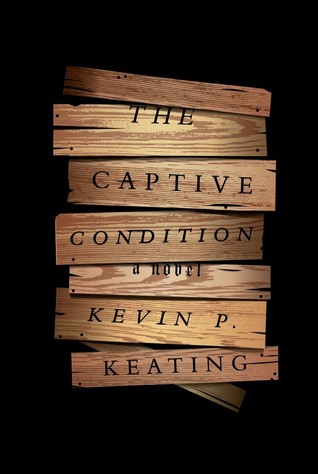
The Captive Condition by Kevin P. Keating

Sunday, August 30, 2015

The Captive Condition by Kevin P. Keating
Publisher: Pantheon. July 2015
Pages: 267
Genre: Literary Fiction, Horror
Source: Publisher


ADD TO GOODREADS

BUY FROM INDIEBOUND

BUY FROM BOOK DEPOSITORY
When Emily Ryan is found drowned in the family pool, pumped full of barbiturates and alcohol, a series of events with cataclysmic consequences ensues. Emily’s lover, a college professor, finds himself responsible for her twin daughters, whose piercing stares fill him with the guilt and anguish he so desperately tries to hide from his wife. A low-level criminal named The Gonk takes over the cottage of a reclusive elderly artist, complete with graveyard and moonshine still, and devises plans for both. His young apprentice, haunted by inner demons, seeks retribution for the professor’s wicked deeds. The town itself, buzzing into decadent life after sundown, traps its inhabitants in patterns of inexplicable behavior all the while drawing them toward a night in which the horror will reach its disturbing and inevitable conclusion. - Goodreads

The Captive Condition has some intense Twin Peaks and True Detective vibes. The small town location is gritty and unsettling. The multiple characters the story jumps between are bizarre, harbor terrible secrets, and are always watching one another. Another similarity: There are a startling amount of surreal aspects that happen so quickly and casually, it's hard to tell what's reality and what's some character's dark hallucinations.

"The problem is this: Normandy Falls, in all its gruesome comedy, in all its colorful and agreeable horror, could never properly prepare me for the experiences that awaited me on the other side of those gates. Regrettably, the best I can do is render one version of that unhappy fiasco, and I must rely on my imperfect memory, a thing that, like the Wakefield River, flows with maddening predictability in one direction only, far from its mysterious and secret source."

The book is being narrated by a college dropout who fancies himself a writer. A lot of the language slowed down my reading of the book significantly. Not because I was too dumb to understand it, but because it would take a hefty paragraph to say something that could take a sentence. Whether or not this was a stylistic choice due to the main character's situation, the overload of adjectives, adverbs, and similes made the book more of a chore to read than I had wanted it to be. Oftentimes, because I would get lost in the flood of words, it was hard to keep track of what was going on in the plot or what exactly was motivating the characters.

With that said, the story really did pick up after 200 pages. It started to get pretty weird, with some potentially supernatural presences. The characters' stories started to come together to several very dramatic, slightly surreal conclusions. That level of strange darkness was really cool to experience. It just would have been great to have experienced it throughout the rest of the book.


SOME QUOTES:
                       
"When the delirium of love dies and the asphyxiating cloud of romantic ruin finally dissipates, the bruised and battered survivors will often find lurking among the rubble and ashes of the human heart an insidious beast who yearns to wreak more havoc."


HOW OUTLANDISH WAS IT?

6/10 - It starts to get a little supernatural and strange near the end, though that isn't really explained.


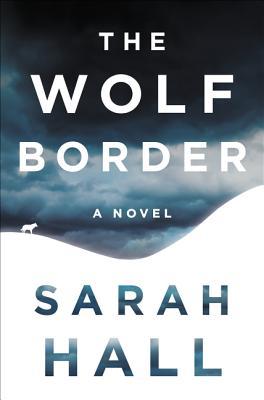
Review: The Wolf Border by Sarah Hall

Saturday, June 13, 2015

The Wolf Border by Sarah Hall
Publisher: Harper. June 9, 2015
Pages: 448
Genre: Literary fiction
Source: Publisher
First Line: It's not often she dreams about them.


ADD TO GOODREADS

BUY FROM INDIEBOUND

BUY FROM BOOK DEPOSITORY
For almost a decade, zoologist Rachel Caine has lived a solitary existence far from her estranged family in England, monitoring wolves in a remote section of Idaho as part of a wildlife recovery program. But a surprising phone call takes her back to the peat and wet light of the Lake District where she grew up. The eccentric Earl of Annerdale has a controversial scheme to reintroduce the Grey Wolf to the English countryside, and he wants Rachel to spearhead the project. Though she's skeptical, the earl's lands are close to the village where she grew up, and where her aging mother now lives.

While the earl's plan harks back to an ancient idyll of untamed British wilderness, Rachel must contend with modern-day realities--health and safety issues, public anger and fear, cynical political interests. But the return of the Grey unexpectedly sparks her own regeneration. - Goodreads

I'm so torn about this book. To be completely honest, I almost put it down several times. I didn't, because Sarah Hall's writing was actually stunning and I wanted to know what was going to happen with Rachel and the grey wolves. The problem was that I was waiting anxiously for Rachel to stop being a passive character. And I don't know that she ever really did.

Rachel's an interesting one. She's often cold, distant, quietly analyzing; almost wild herself. Much of our time is spent watching things happen to her. And that made me kind of crazy. I realize that inaction is a choice in itself, but that doesn't make for an amazing reading experience when it's the default choice.

If I had known this book would be mostly about pregnancy and having a kid and relationships, and hardly about wolves, I don't know that I would have read it. I mean, I obviously expected the wolf stuff to reveal things about those topics and for Rachel's life to be the main story. But a lot of the time the wolf stuff felt inconsequential. I would've at least liked to see them a bit more, if not learn about them more.

Despite my issues with the plot and characterization (which made it a pretty slow read for me), Sarah Hall's vocabulary is incredible. When we get to see the wolves and the wilderness, it's beautiful and vivid. And Hall wrote some profound moments/realizations about familial relationships, love, and motherhood. Her talent can't be denied, I just wished the action had picked up sooner than 70% in.


Some Quotes:

"What use are higher faculties now, Rachel thinks, as she indicates and pulls out onto the road. Cognition and invention, the internal combustion engine, intermittent wipers, peace treaties and poetry, the homosapien thumb and tongue? Is optionality really evolutionary ascent when it leads to paralysis?"

"The strong April sunlight renders his fur brilliant, pale gold and silver-white, like the blaze of a matchhead. He could almost set fire to the trees. He's going to vanish, Rachel thinks, against the snow and the moors, against the blonde sward of the grassland."

"What else can she say amid the banal, undramatic language of the medical world? How will I be a mother? Will I feel love?"


Outlandishness Rating: 4/10

It's kind of weird, because it's almost an alternate history of the UK. Obviously wolves haven't been reintroduced to the wild. But also Scotland becomes an independent nation. Kind of interesting, but not touched on very much.


Review: The Shore by Sara Taylor

Friday, May 29, 2015

The Shore by Sara Taylor
Publisher: Hogarth. May 26, 2015
Pages: 320
Genre: Literary fiction
Source: Publisher
First Line: When news of the murder breaks I'm in Matthew's buying chicken necks so my little sister Renee and I can go crabbing.


ADD TO GOODREADS

BUY FROM INDIEBOUND

BUY FROM BOOK DEPOSITORY


We are one of three islands, off the coast of Virginia and just south of Maryland, trailing out into the Atlantic Ocean like someone's dripped paint.

The first chapter of this book absolutely blew me away and the rest of the book did not disappoint. If you're at all interested in dark, gritty Southern Gothic literature, or perhaps think you could be but have been put off by how male-dominated those stories tend to be, grab this immediately. And if you want a little dose of magical realism, too, you're in the right place. I waited a couple weeks to read this after acquiring it, and I regret it.

The Shore is an interesting book, in that each chapter focuses on a different character (though sometimes narrators recur) and each chapter jumps to a different year, sometimes up to 100 years in difference. But the common thread is that they all focus on families, and particularly the tough and fascinating women, who inhabit a group of islands off the shore of Virginia. And boy does Sara Taylor know how to evoke a sense of place. The marshland these families have populated for years is both desolate and enchanting. Taylor's writing is absolutely stunning and I loved just soaking in how real and rich her descriptions were.

Behind her, the marsh stretches silver and gray and bright lime green, veined with creeks the reflect the blue of the sky, out to the gold smudge of barrier islands and white smudge of breakers at the horizon.

Taylor is also extraordinary at writing characters. Each one was intriguing and different. Sometimes at the beginning of a story, you had no idea who you were watching, but you could begin to recognize people from earlier just based on how they felt. One character that was vaguely mentioned in one story could be the main character of the next one. It was a lot of fun taking notes and trying to keep track of how all these people were related, because they all were in some way, and it added a layer of depth and interaction that many books don't achieve.

It's worth noting that this book is really intense. Beautiful, but intense, and it goes to very dark places. Anything that you imagine might happen in a rural, isolated, run-down set of island towns does. There's violence, crime, drugs, domestic abuse, child abuse, sexual abuse, and rape. I think all of it was important to read and it doesn't feel gratuitous, but it is worth mentioning.

I loved this book. Well, I loved all but the last chapter of this book, which felt unnecessary. But I'm fully behind every other chapter. Even if you think you don't need to read this book, you do. I'm beyond excited to see what Sara Taylor does in the future.

She'd reached out her hands, like he'd shown her, and felt the breeze between her fingers like long strands of dried grass, only this time she felt it in her mind, too, as if her head was an empty room with all the windows open and the breeze was wandering through it. She'd grabbed hold and twisted, and the breeze twirled in on itself, picking up the cut grass on the road, spinning a confused chicken around a few times, then straightening back out.


Outlandishness Rating: 8/10

Ok, I didn't really touch on much of the magical realism, but it is there and it is SO magical. I love how it's just kind of integrated without trying to explain it too much. Also, when I said there can be differences of 100 years between chapters? It definitely goes into the future a couple times. Those stories show a grimmer future. A little bit literary apocalyptic, akin to Station Eleven or Cloud Atlas. It's so good. Except for the last chapter, but we really don't have to talk about that.


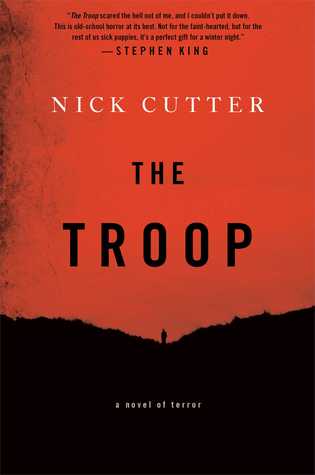
Review: The Troop by Nick Cutter

Wednesday, April 2, 2014

The Troop by Nick Cutter
Publisher: Gallery Books
Pages: 358
Genre: Horror
Source: Publisher
First Line: EAT EAT EAT EAT


ADD TO GOODREADS

BUY FROM INDIEBOUND

BUY FROM BOOK DEPOSITORY


If you want to openly gasp and cringe in front of strangers, read this book on the subway. I had been looking for contemporary, traditional horror that didn't feel like it verged on the side of cartoonish, and I'm glad that I found this. The Troop is a creeping, disturbing book about a boy scout troop that goes to do boy scout things on an uninhabited island. What could go wrong, right? Well, let me tell you. Someone else shows up. Someone who is very, very hungry. Are you interested yet?

This visitor shakes up the previously solid dynamic between Scoutmaster Tim and the five young teen boys in the troop. Something is wrong with the intruder, and nobody is sure what to do about it. Even the adult. And that's where the problem lies for the boys. Tim accidentally exposes them to the bioengineered monstrosity inside of the starving stranger, putting all of them in grave danger. Each of the characters are trying desperately to survive when they realize they're not getting off of the island any time soon, and some are driven to horrifying extremes.

The book switches back and forth between what's happening on the island and various articles/reports/interviews before and after about the thing that has made it to the island. I thought the latter was intriguing, but could have been fleshed out a little more. I most enjoyed the Lord of the Flies-esque tensions between the young boys when they were out on the island on their own, because all of the characters were thought out pretty well and interesting to learn about. Though a few of them (the jock, the nerd) had more stereotypical stories, their personalities still felt fresh and it was fun to see them interact with each other. When and how certain characters cracked kept me from putting this book down. There is some incredibly devious manipulation that goes down that had me nearly covering my eyes and squeaking (making it much harder to read).

The bioengineered worm (as they soon find out) takes its victims fully, sucking all of the life out of them, eating voraciously for them, as well as infecting the brain and telling them how to think. The hunger that consumes the infected characters lead them to eat anything and everything, while they waste away as the host. And it is very easy to get infected. The worm overtaking various characters was gruesome and monstrous, but it never felt like it was being gory just for the sake of being gory. The descriptions left me squirming and feeling sort of...itchy. And maybe a little...hungry.

This is a horrifying story of survival that kept me reading to see who was going to make it out alive, and at what cost.


Some Quotes:

"No parent harboring the hope for a sensitive, artistic child names that child Kent."

"This wasn't a bear or a shark or a psycho axe murderer; those things were bad, sure, but you could get away from them. Hide. How could you hide from a murderer who lived under your skin?"


Outlandishness Rating: 7/10

The descriptions of the worm taking hold of people were pretty gruesome and weird, transforming characters in shocking ways that I didn't expect even after seeing previous characters go through it.


Review: Graphic the Valley by Peter Brown Hoffmeister

Sunday, March 2, 2014


Graphic the Valley by Peter Brown Hoffmeister
Publisher: Tyrus Books. July 18, 2013
Pages: 272
Genre: Literary Fiction
Source: Publisher


ADD TO GOODREADS

BUY FROM INDIEBOUND

BUY FROM BOOK DEPOSITORY


It took me a while to get comfortable with this book. The writing style is sparse, but lyrical. Often written in fragmented sentences. After a while, though, it fell away and all I had left to see was the story and the beautiful Yosemite valley. This book is about the life of Tenaya, a young man who has been raised his whole life camping in the Yosemite National Park. It starts with his accidental killing of a new, corporate park superintendent. Tenaya has gone through some other horrible things, but his past unfolds slowly and delicately throughout the novel. We have to follow him surviving completely off the grid and dealing with the growing commercialization of the park before we get to know him better. But it's worth it.

This novel is very powerful as a whole and in its singular moments. Several times while reading this on the subway I found myself audibly gasping and covering my mouth. Hoffmeister brings us very close to the main character; his thoughts and how he perceives the valley. How he embodies the Valley and its history. Unrelated, but Tenaya is also an avid rock climber/boulderer (he doesn't wear shoes, which is so hardcore). I'm getting into rock climbing, so this was exciting for me. This book just kept surprising me with little things to be entranced by.

The book is described as a modern day retelling of Samson and Delilah, but I thought it was only lightly so. Certainly not enough to entitle sections of the book with their names. I thought the book was mythic enough to stand without that support. The relationships he has with two women are interesting and intimate, but I felt like the women characters could have been rounded out more. Calling one a Delilah wasn't quite enough for me.

Overall, Graphic the Valley is a great piece that shows the importance of the issue with commercialization of national parks (a topic that I've never really thought about, as I've never been to one). It also ultimately shows the incredible power of nature that is often ignored or forgotten in a breathtaking ending.

I didn't know what Yosemite looked like, but this video gave me an idea of how pretty it is.


Yosemite HD II from Project Yosemite on Vimeo.


Some Quotes:

"There was the Valley, and the Valley was in me, and the Valley was with me."

"The man smiled like a forest fire."

"My bones flourish like grass. His worms will not die."

"He brought the cigar up to his lips and puffed, the smell like two fingers snapping in front of my eyes."

"'We need that long-term suffering in our lives. That struggle. That abject fear. We need the carabiners humming with electricity against the anchor bolts, bright blue and shaking.'"


Outlandishness Rating: 7/10

The writing style took me by surprise and the narrative is pretty nonlinear, with glimpses into Tenaya's past floating in and out of the current-day story. Each chapter also starts with a fragment of an older story having to do with the valley's Native American history. Finishing it made me want to reread to see all of the different things being laid out, now that I know how it all ended.


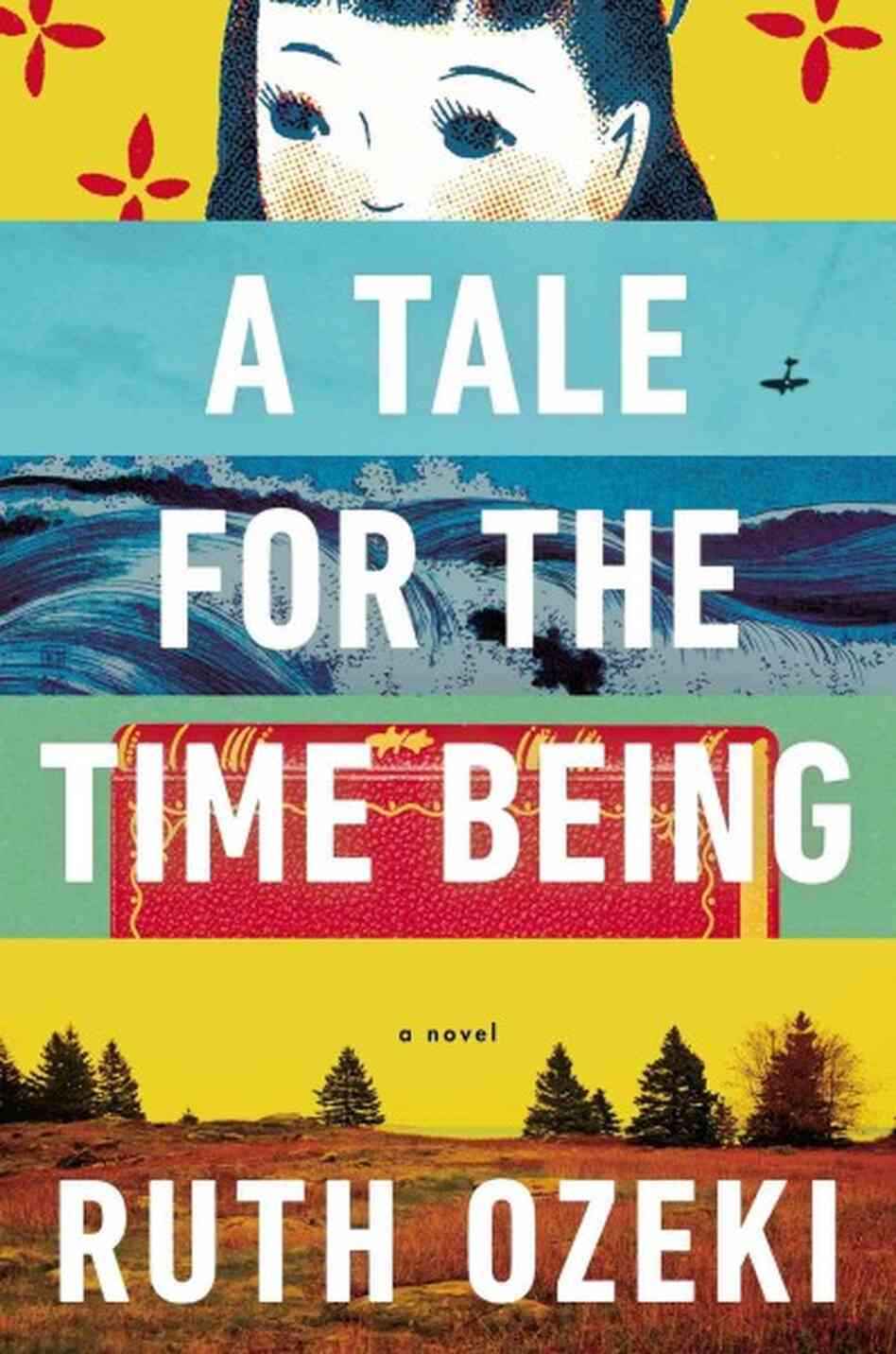
Review: A Tale for the Time Being by Ruth Ozeki

Monday, January 27, 2014

A Tale for the Time Being by Ruth Ozeki
Publisher: Viking Adult. March 2013
Pages: 432
Genre: Literary Fiction
Source: Publisher
First Line: "Hi! My name is Nao, and I am a time being."


ADD TO GOODREADS

BUY FROM INDIEBOUND

BUY FROM BOOK DEPOSITORY


I'm very often suckered in by Japanese themes, and A Tale for the Time Being had just the right combination of the contemporary and the historic. The weird and the zen. Not to mention the fantastic and interesting half of the main characters and the story.

Ruth, not the writer but the character, who happens to be a writer (wild coincidence) lives on the coast of Canada and one day finds washed up on the beach a Hello Kitty lunch box. Inside of it holds the diary of a suicidal Japanese sixteen-year-old who wants to document the life of her 104-year-old Buddhist nun grandmother as the last thing she does. Nao's accounts of her life are both riveting and insightful. She goes through a lot -- ijime (a harshly isolating type of bullying that only exists in Japanese schools), a suicidal parent, trips to "maid cafes", and more I don't care to spoil. I loved her story, the mentions of zen Buddhism, and the mystery that shrouds her identity.

My main issue is with the half of the story that isn't Naoko's. Ruth's. Normally books about writers are hard for me to read unless they're done really really well. Like it just feels too easy. A main character actually being the author, with all of the less interesting characteristics of that person left in was almost painful. Her and her husband's pet cat was mentioned a lot. I love cats, but it sometimes felt boring in comparison to how vibrant and interesting Naoko's voice was. At the same time, though, Ruth felt very much like a companion. So generic that I could place myself into her. We had the same reactions to the same parts of Nao's diaries. I experienced what she was experiencing, and that was a sort of surreal reality to exist in. Because of that, I can't hate that she did it. I wanted to, but by the end it worked.

A Tale for the Time Being gets very meta and philosophical, exploring relations between readers and writers, and humans in general, especially over spans of time. Somehow quantum physics gets thrown into there too, but it's done well. Parts at the beginning were slow, but in the last half as Ruth is unraveling the mystery of Nao and Nao's life is spinning more out of control, I couldn't put it down. I definitely enjoyed this book.


Some Quotes:

"Is death even possible in a universe of many worlds? Is suicide? For every world in which you kill yourself, there'll be another in which you don't, in which you go on living. Many worlds seems to guarantee a kind of immortality..."

"Feelings lap at her edges like waves on the sand."


Outlandishness Rating: 7/10

Japanese culture has a lot of weird in it. Dysfunctional families, ijime, girl gangs, maid cafes, love hotels, etc. That along with the hints of minor magical realism make this a pretty interesting book.

Share

Related Posts Plugin for WordPress, Blogger...