Outlandish Lit

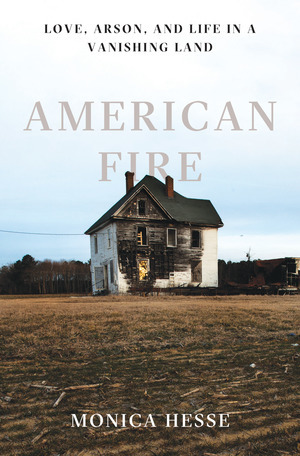
American Fire by Monica Hesse :: Review

Monday, August 7, 2017

American Fire by Monica Hesse :: Outlandish Lit Review
American Fire by Monica Hesse
Publisher: Liveright. July 11, 2017.
Pages: 255
Genre: True Crime
Source: Publisher


ADD TO GOODREADS

BUY FROM INDIEBOUND

BUY FROM BOOK DEPOSITORY


What a true crime time to be alive! Podcasts and shows focused on real murders are super popular right now. But let us not forget an equally fascinating crime, the object of Sia and Rihanna's affection (or, at least, attention) in several music videos: arson! What else is super popular? The examination of rural American life. This book gives you both, with a side of thorough research and beautiful writing. American Fire is the story of Accomack county in rural Virginia that in 2012 was victim to 67 fires within a five-month period. It's the story of the two people, crazy in love, who set 67 (mostly) abandoned buildings ablaze undetected, and why.

"I spent the next two years trying to understand why he did it. The answer, inasmuch as there is an answer for these things, involved hope, poverty, pride, Walmart, erectile dysfunction, Steak-umms (the chopped meat sold in the frozen food aisle) intrigue, and America. America: the way it's disappointing sometimes, the way it's never what it used to be."

The narrative that Washington Post feature writer Monica Hesse has wrangled is complicated, yet extremely coherent and compelling. We learn a lot about firefighting and the investigation of arson. Seriously, I had no idea I would be so interested in learning about volunteer firefighting and its impact on a community. Hesse includes historical and psychological examinations of arsonists, as well as an analysis of the area’s economic situation. Accomack County is an isolated place under pressure from the rest of society to change. The ways that the residents made money are no longer profitable or no longer exist. Many of the residents feel forgotten. To then be betrayed by somebody in the community, who remains unidentified for so long, is an impossible struggle.

Hesse also looks at what people will do when they are deep in love and under a considerable amount of stress. Charlie Smith, the man who pleaded guilty to the fires, is a fascinatingly earnest and troubled person. More fascinating is his girlfriend, Tonya Bundick, and the dark shift that took place in their epic love story. This is great true crime, featuring details about the arsons, interrogations, and trials, with a “This American Life” tone of storytelling. If you have an interest in true crime, but haven't read a true crime book, this is a great place to start.
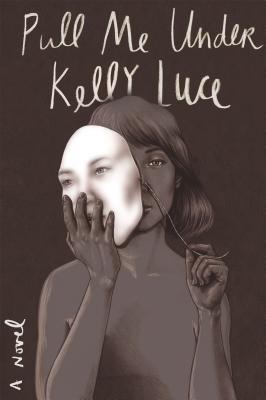
Pull Me Under by Kelly Luce :: Review

Wednesday, December 7, 2016

Pull Me Under by Kelly Luce :: Outlandish Lit Review
Pull Me Under by Kelly Luce
Publisher: FSG. November 1, 2016.
Pages: 272
Genre: Literary Fiction
Source: Publisher


ADD TO GOODREADS

BUY FROM INDIEBOUND

BUY FROM BOOK DEPOSITORY
Kelly Luce's Pull Me Under tells the story of Rio Silvestri, who, when she was twelve years old, fatally stabbed a school bully. Rio, born Chizuru Akitani, is the Japanese American daughter of the revered violinist Hiro Akitani--a Living National Treasure in Japan and a man Rio hasn't spoken to since she left her home country for the United States (and a new identity) after her violent crime. Her father's death, along with a mysterious package that arrives on her doorstep in Boulder, Colorado, spurs her to return to Japan for the first time in twenty years. There she is forced to confront her past in ways she never imagined, pushing herself, her relationships with her husband and daughter, and her own sense of who she is to the brink. -Goodreads

If you've been to Japan, you will enjoy reading this book. If you want to feel like you've been to Japan, you will also enjoy reading this book. At the beginning, you're immediately drawn in. Half Japanese, half American girl Chizuru kills her school bully - SO JAPANESE. We see her at that time and we see her later as a pretty well-rounded, stable adult. But when she learns that her father who abandoned her has died, she decides to go to Japan by herself. And that's when all sorts of pent up stuff bubbles up to the surface. Rio/Chizuru has a lot of stuff to figure out about herself that she has been ignoring. Even though this book is about someone who murdered their school bully, the vast majority of it felt like a road trip book (on foot). Luce is excellent at capturing how it feels to be in Japan. It was a complete delight for me, because I went there so recently. And there are some pretty interesting characters that are introduced once Rio arrives.

My mom hated the misogyny she witnessed in Japan. She'd ranted about Miura-san ogling her in his office to Hiro, who only shrugged. It didn't seem like a big deal to me at the time--I'd have loved to be thought pretty like my mom was. I noticed the stereotypes when I got older, for a different reason: people were always surprised when they learned that Tomoya's killer was female. As if a girl couldn't feel rage, couldn't be brutal.

Because I was having so much fun vicariously being in Japan again, I had to force myself to take a step back and see how the book was actually doing plot-wise. And, to be honest, much of it felt just like things were just happening for things to happen. Often there were strained interactions between characters that seemed unrealistic. Like a character bails on a planned dinner with Rio to go on a pilgrimage to different temples and Rio runs into her before she gets a chance to bail. What does she do? Insists she go with her. I get that the intent was to show how awkward and unaware Rio was being, but there are a lot of strangely motivated choices like this. Things sometimes felt like they were coming out of nowhere, because we didn't get as close to the characters as we could have.

I think Pull Me Under edged into some really important and interesting questions about personal identity and whether or not people can change - and what that change could look like. It dealt with some dark themes that I would've liked a deeper look at. I wanted to know more about Rio's mother's suicide. I wanted to know more about what was going through Rio's head during a death that happens halfway through the book. There were a ton of moments that looked like opportunities for big things to be revealed, but sometimes there was no follow through. Like we walked up to the gates of this potential new information, then we walked away randomly. It was a little jarring a couple of times. Though the pacing and plot structure were both a little uneven, Kelly Luce is quite a good writer and at no point did I want to stop reading. Not bad for a debut novel.


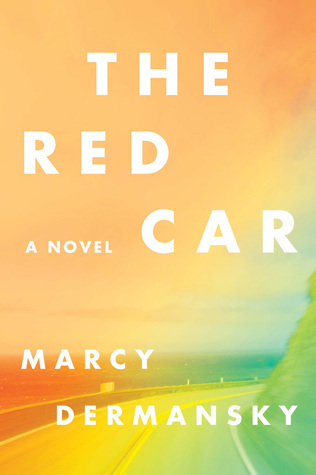
The Red Car by Marcy Dermansky :: Review

Friday, November 4, 2016

The Red Car by Marcy Dermansky :: Outlandish Lit Review
The Red Car by Marcy Dermansky
Publisher: Liveright. October 11, 2016.
Pages: 208
Genre: Literary Fiction
Source: Publisher


ADD TO GOODREADS

BUY FROM INDIEBOUND

BUY FROM BOOK DEPOSITORY
Leah is living in Queens with a possessive husband she doesn’t love and a long list of unfulfilled ambitions, when she’s jolted from a thick ennui by a call from the past. Her beloved former boss and friend, Judy, has died in a car accident and left Leah her most prized possession and, as it turns out, the instrument of Judy’s death: a red sports car.

Judy was the mentor Leah never expected. She encouraged Leah’s dreams, analyzed her love life, and eased her into adulthood over long lunches away from the office. Facing the jarring disconnect between the life she expected and the one she is now actually living, Leah takes off for San Francisco to claim Judy’s car. In sprawling days defined by sex, sorrow, and unexpected delight, Leah revisits past lives and loves in search of a self she abandoned long ago. Piercing through Leah’s surreal haze is the enigmatic voice of Judy, as sharp as ever, providing wry commentary on Leah’s every move. -Goodreads

The Red Car was totally not what I expected. Honestly, the publisher blurb makes it sound like a borderline Eat Pray Love journey of self discovery featuring a constant soundtrack of Natasha Bedingfield. Luckily for us, that is SO not what this book is. It is much weirder than that. If you like the straight forward, quirky, honest sense of humor of Miranda July and/or the sparse, powerful writing of Lydia Davis, this is the book for you. And that's exactly why it was the book for me.

The mechanic leaned over and tried to kiss me.
I took a step away. I realized I was in a high place. I could actually fall. I sadly shook my head. It seemed unfair. After Lea. After Diego. But I did not want to kiss the mechanic.
"A guy has to try," he said.
"No, you don't," I said quiety.

I don't want to say much about the plot. Leah had a boss who she had a close bond with, then Leah moved away. Her boss, Judy, wanted her to succeed. Leah ends up married to an awful guy who seems benign and she is mostly complacent. She hadn't spoken to Judy in years, and one day she is shocked to find out that Judy is dead. And Judy left her the red car that she loved and that Leah hated (also the car that Judy died in), in addition to something else. A thing happens that makes Leah 100% decide to fly to San Francisco by herself. And then some weird stuff goes down. I WISH I could say more, but I can't. Just know that it is a tightly written story and a quick, enjoyable read. I laughed a lot, I also cried. It's dark. And, again, it's WEIRD. There were some sexy times in the book which is normally horrifying for me (I'm not a prude at all, but sex scenes make me blush too much), but it was done perfectly and never felt gratuitous.

The writing is the best part of this book, and I don't mean that in a bad way like as if other things were lacking. I mean that it was well written on all fronts. Real emotion and thought was evoked. Intelligent, contemporary, and completely on point. I need to read every other word Marcy Dermansky has ever written.

Scratch by Steve Himmer :: Review

Thursday, October 20, 2016

Outlandish Lit's Scratch by Steve Himmer ReviewScratch by Steve Himmer
Publisher: Dark House Press. October 11, 2016.
Pages: 200
Genre: Literary?? Supernatural mystery??
Source: Publisher


ADD TO GOODREADS

BUY FROM INDIEBOUND

BUY FROM BOOK DEPOSITORY
Martin Blaskett moves to a small town to oversee construction of a housing development, where he encounters a shape-shifting figure from local legend—Scratch. He is taken under the wing of his new neighbor, a retired hunting guide named Gil Rose, and befriends a local woman named Alison. Along the way, trouble ensues as Scratch feels threatened by changes to the landscape, luring locals out into the woods, including Alison’s son. As the blame for a range of events falls at Martin’s feet, he is beset by increasingly inhuman dreams, and comes to doubt his own innocence. A literary novel of wilderness noir that engages the supernatural elements of folklore in the manner of magical realism, Scratch explores the overlapping layers of history, ecology, and storytelling that make up a place. -Goodreads

Scratch had just about everything I want in a book. A forest with more going on in it than we know? Check. Mysterious disappearances? Check. Weird animal stuff? Check. A formless shapeshifting narrator who puts our main character in harm's way for the sake of the story he wants to create? Ok, maybe I didn't explicitly want that, but I got it. Scratch's concept is pretty brilliant. A shapeshifter (named Scratch) has lived in a forest in the middle of nowhere since...forever, basically. At first he didn't have a form at all, but then he tried turning himself into animals to live like them and, hey, it worked! Scratch is both a protector and a mischief maker, and we get the opportunity to hear this story from his point of view. This novel gives a whole lot of credit to animals, nature, and dreams, which I love.

"We found something," she says. "In the first hole."
"Found what?"
"Bones, Mr. Blaskett. We just started digging, and the ground's full of bones."

Martin, the main character, is a hapless man who doesn't have a lot going on in his life apart from his house constructing/real estate career. He decides to build a collection of homes in a very small town and in the back of his head he has the idea that he will move there and get away from the city too. He interacts with very few people other than Gil, the hunter across the road who is a delight, and Alison, the woman he's hired to oversee the construction of the houses. One day, he follows a fox into the forest and he can't seem to stop himself. He gets horribly lost and ends up sleeping in the woods, only to be awoken by a bear attacking him. That's where it all begins. The animals acting strangely, the surreal dreams Martin has about the wild, and people in the town beginning to disappear. Martin is somehow connected to all of it, and of course Scratch, the local legend, has something to do with it.

This book is only very slightly creepy. It was slow going at some points, and we spend perhaps too much time in Martin's head thinking about his past (living with a neglectful single mother) and the borderline stereotypical issues that past brings up. I wouldn't have minded had the book gotten a little bit weirder than it did, but that's obviously just a personal preference. I really enjoyed the concept and the idea of the ending, but it lacked a little in execution and consequence. There was nothing bad about this book, but the plot could have packed a little more of a punch for where the characters all end up.

I didn't begin as one of your own who was cursed--I was in these woods without form before the first warm-blooded body appeared. I was here before your kind arrived, before any kind arrived, because you needed me here to become what you are. You needed a reason to raise up the walls you hoped would keep me out, and to invent the electric lights and alarms that allow you to sleep through the night. Without me to spur your inventions, what would your kind have become? What would your languages be without the need to give your fear names?

The Traitor Baru Cormorant by Seth Dickinson :: Review

Friday, October 7, 2016

The Traitor Baru Cormorant by Seth Dickinson :: Outlandish Lit Review
The Traitor Baru Cormorant by Seth Dickinson
Publisher: Tor. September 2015.
Pages: 399
Genre: Fantasy
Source: Library (audiobook)


ADD TO GOODREADS

BUY FROM INDIEBOUND

BUY FROM BOOK DEPOSITORY
The Empire of Masks is coming, armed with coin and ink, doctrine and compass, soap and lies. They'll conquer Baru’s island, rewrite her culture, criminalize her customs, and dispose of one of her fathers. But Baru is patient. She'll swallow her hate, prove her talent, and join the Masquerade. She will learn the secrets of empire. She’ll be exactly what they need. And she'll claw her way high enough up the rungs of power to set her people free.

In a final test of her loyalty, the Masquerade will send Baru to bring order to distant Aurdwynn, a snakepit of rebels, informants, and seditious dukes. Aurdwynn kills everyone who tries to rule it. To survive, Baru will need to untangle this land’s intricate web of treachery - and conceal her attraction to the dangerously fascinating Duchess Tain Hu.-Goodreads

I don't really know where to begin describing how good this book is and how badly you need to read it. I don't care who you are, you need this book. Even if you don't normally read fantasy, READ THIS BOOK. Because I don't normally read fantasy either. I'm not biased against it, but I just don't read it that often. This is a standalone (though apparently a sequel's being worked on, which is SO EXCITING) geopolitical fantasy about a woman named Baru Cormorant. When she's young, her home country Taranoke is invaded by The Empire of Masks/The Masquerade/a bunch of assholes who like punishing people for sins and doing weird selective breeding stuff. She grows up seeing them change her island, her mother and two fathers are split apart and punished, and she goes to school to be taught the empire's education. And she's really, really smart. But she harbors a hatred of the empire for what they've done and she wants power to save Taranoke. She's willing to work her way up through the empire to get it. Her superiors (excuse me for avoiding using names, I listened to the audiobook and have no idea how to spell anything) notice how smart she is and she's eventually sent to a far away country where she's to be the imperial accountant. It sounds like a boring job at first, but through examining the accounts, Baru unearths a conspiracy. And that's where she begins practicing exercising power and navigating the politics of a country very thoughtfully. Shit gets crazy.

So much of this book is about politics and economics that I didn't think I'd enjoy it, but it's ABSOLUTELY riveting. If you like the politics of Game of Thrones, you'll absolutely love this. Baru Cormorant is an incredible character. Sharp as hell, incredibly thoughtful, sometimes ruthless. She knows what's going on and she's willing to play any game she has to. We never know who around her she can trust. And all the while, Baru has a secret about her sexual orientation that could get her killed by the empire. You never know for sure where loyalties lie. It is so intense and so much fun. The drama is real. There are so many twists. So much gasping. I'll stop gushing now.

If you want to be entirely wrapped up in a story, enjoy complicated plots and well written characters, and are interested in stories that feature interesting gender/sexual orientation stuff, you have to check this out. The ending will blow you away. Please read this book so we can talk about it.

Children of the New World by Alexander Weinstein :: Review

Tuesday, September 20, 2016

Children of the New World by Alexander Weinstein :: Outlandish Lit Review
Children of the New World by Alexander Weinstein
Publisher: Picador. September 13, 2016.
Pages: 240
Genre: Short Stories
Source: Publisher


ADD TO GOODREADS

BUY FROM INDIEBOUND

BUY FROM BOOK DEPOSITORY
Children of the New World introduces readers to a near-future world of social media implants, memory manufacturers, dangerously immersive virtual reality games, and alarmingly intuitive robots. Many of these characters live in a utopian future of instant connection and technological gratification that belies an unbridgeable human distance, while others inhabit a post-collapse landscape made primitive by disaster, which they must work to rebuild as we once did millennia ago.
Children of the New World grapples with our unease in this modern world and how our ever-growing dependence on new technologies has changed the shape of our society.-Goodreads

I haven't been this excited about reading a book in what feels like forever. I knew that I'd like this collection of short stories. It was pitched to me as akin to the TV show Black Mirror, which I absolutely loved. And they weren't wrong about that. Here we have a collection of stories that are all speculative. Set in the very near future, things are just a little different from how they are now. People are a little more hooked into technology, the environment is more fucked, etc. Our scenarios are set up quickly and with apparent ease, and we then get to see normal people interacting with each other in these worlds. The result is at times funny, at times devastating, often both. Weinstein provides riveting stories about being human as well as biting commentary on our world. In the stories, we've got robotic siblings to help out with biological children, and what you do when they malfunction. Enlightenment as a drug (Moksha). Manufactured memories. Support groups for the loss of virtual children. It's all so good, and none of it feels wildly off base from where we are as a society right now.

Moksha, it turned out, wasn't bullshit. It'd just gone into hiding ever since the twenties when the U.S. cracked down on Nepali distribution. There had been nonstop busts at yoga studios and health spas in the U.S. An oxygen bar in Sedona had been found with makeshift crown plates hooked up to an old Sega Genesis console.

I really emphatically enjoyed this whole collection. The only thing keeping me from loving it unconditionally is the fact that none of the stories have a female main character and none of them pass the Bechdel test. To be fair, two of the stories have weird formats and don't actually have a character. One of the shorter stories never specifies the gender. But it was still disappointing. I get if you're somebody who writes about a certain thing. I do. But to both 1) not take up the challenge to write about somebody different from you, or 2) not see females as "just another kind of person" that should be relatively easy to write about because, again, they are just another kind of person, is a disappointment. If the plots of the stories weren't so intriguing, I probably would've begun to find the "wearied male trying to make his family/life work" character that reappeared in most of the stories boring.

It was Rocket Night at our daughter's elementary school, the night when parents, students, and administrators gather to place the least-liked child in a rocket and shoot him into the stars.

Truly, though, that is my only qualm with the book. I want everyone to read these stories, but my point above is something to be aware of and think about. This is one of the most consistently solid collections of short stories that I've read in a while. I've actually sat and read them aloud to people, they're so good. Dark, cleverly written, and brilliantly imagined. I laughed and I cried. Alexander Weinstein gets it. He fucking gets it. And, if you were wondering, my favorite story was "The Cartographers."

"I'm afraid all of your family is corrupted," the supervisor told me. "You'll just end up bringing the virus with you. It's an easy process to reboot. Simply hold down the power button on your console for twenty seconds and--"

"These are my children!" I yelled.

"If it's any consolation, they won't feel a thing; they're just data."

Where We Go When All We Were Is Gone by Sequoia Nagamatsu :: Review

Thursday, September 8, 2016

Where We Go When All We Were Is Gone by Sequoia Nagamatsu
Publisher: Black Lawrence Press. May 2016.
Pages: 166
Genre: Short Stories
Source: Publisher


ADD TO GOODREADS

BUY FROM INDIEBOUND

BUY FROM BOOK DEPOSITORY
“The Return to Monsterland” opens 'Where We Go When All We Were Is Gone,' a collection of twelve fabulist and genre-bending stories inspired by Japanese folklore, historical events, and pop culture. In “Rokurokubi”, a man who has the demonic ability to stretch his neck to incredible lengths tries to save a marriage built on secrets. The recently dead find their footing in “The Inn of the Dead’s Orientation for Being a Japanese Ghost”. In “Girl Zero”, a couple navigates the complexities of reviving their deceased daughter via the help of a shapeshifter. And, in the title story, a woman instigates a months-long dancing frenzy in a Tokyo where people don’t die but are simply reborn without their memories.

Every story in the collection turns to the fantastic, the mysticism of the past, and the absurdities of the future to illuminate the spaces we occupy when we, as individuals and as a society, are at our most vulnerable.-Goodreads

Reading this collection of short stories rich with magical realism was such a delight while I was in Japan and afterward. For months beforehand, I had been watching a lot of Japaneses TV and listening to a lot of Japanese podcasts to work on listening comprehension. One of the things I watched was a kids shows that told simplified, cartoonized Japanese folktales. So as I read this book, there were a lot of moments where I already knew the story it was based on and I feel like I got more out of some of them. But, at the same time, there were several things that were very surprising to me (such as the long neck demon Rokurokubi, which is probably even more unsettling than it sounds). Both situations were fun to be in. Each story dives headfirst into a creatively imagined world where something from Japanese popular culture (i.e. Godzilla) or folklore (i.e. the kappa) is real. I loved this book for its fearlessness and its strangeness.

As is expected with short story collections, there are going to be some that are better than others. The ones that were good were really good. I think Girl Zero would have to be my favorite, due to how much gasping I did while reading it. There are a lot of moments of beauty throughout. But, unfortunately, a few of the stories fell kind of flat despite their interesting concepts. In a couple I just wasn't 100% sure why I was reading what I was reading, which isn't a great feeling to have. The stories that are good are magical and creepy and funny. It would be a shame for anybody interested in Japanese folklore and popular culture to miss out on these tales.

Sidenote: I went to Sequoia Nagamatsu's reading which was a ton of fun with a big crowd, but I was sad to find out that he had other readers there because that meant he only read one story, and it wasn't a favorite. I wanted him to read more!! Oh, also I won a big stuffed Godzilla at the reading, so I'm pleased. And this does not affect my review at all because it was a random raffle and I need my bribery to be more direct than that.

My favorite stories:
1. // Girl Zero
2. // Rokurokubi
3. // The Peach Boy
4. // The Inn of the Dead's Orientation for Being a Japanese Ghost


The Natural Way of Things by Charlotte Wood :: Review

Tuesday, August 30, 2016

The Natural Way of Things by Charlotte Wood :: Outlandish Lit's Review
The Natural Way of Things by Charlotte Wood
Publisher: Europa Editions. June 28, 2016.
Pages: 230
Genre: Literary
Source: Publisher


ADD TO GOODREADS

BUY FROM INDIEBOUND

BUY FROM BOOK DEPOSITORY
Drugged, dressed in old-fashioned rags, and fiending for a cigarette, Yolanda wakes up in a barren room. Verla, a young woman who seems vaguely familiar, sits nearby. Down a hallway echoing loudly with the voices of mysterious men, in a stark compound deep in the Australian outback, other captive women are just coming to. Starved, sedated, the girls can't be sure of anything—except the painful episodes in their pasts that link them.

Charlotte Wood depicts a world where a woman's sexuality has become a weapon turned against her. The characters, each marked by their own public scandal, are silenced and shackled by a cruel system of corporate control and misogyny. In a Kafkaesque drag of days marked only by the increasing strangeness of their predicament, the fraught, surreal, and fierce reality of inhabiting a female body becomes frighteningly vivid.-Goodreads

I went into this book completely expecting to love it. It won the 2016 Stella Prize, a prize for Australian fiction & non-fiction written by women. I was more than ready to be blown away. So many people I trust rated this 4 to 5 stars. And, let's be real, it's completely in my wheelhouse. The best way I've heard it described is as "feminist horror." Women who have been involved in sexual scandals (mistresses, rape victims, etc.) are gathered up and taken to a range in the middle of nowhere where they're treated like animals basically. I'm so there for feminist allegory. I'm not squeamish about graphic stuff. And, still, this book did not completely work for me.

Wood's writing is quite good. I loved any description of the outback of Australia. But no matter how much I wanted to love this story, I felt like I was often pushing to continue it. It didn't feel especially compelling to me. And then there was the ending. I won't go into details, but I will just say that I'm totally fine with open endings! I don't need all the questions answered. But the whole time I was reading, I was waiting for a real wow moment that would turn it into a 5 star read for me and it never happened. Even if a novel is full of rich, important metaphors, it's still crucial to have a solid story that carries those metaphors. A story that keeps the reader reading and gives the metaphors context. The mystery about what exactly was going on was completely intriguing! But I didn't get the payoff I expected after all the build up. It's difficult to leave everything open and also be a metaphor heavy novel, because the points you're trying to make won't have enough support to leave a lasting impression on the reader. Surely, one of the main points made at the very end about what happens to the women involved in these events is important, but it wasn't a new idea for me. It was very much something I had thought about before. So if that was where the wow was, it didn't affect me in a strong way. Maybe it will for other readers.

Would it be said they were abandoned or taken, the way people said a girl was attacked, a woman was raped, this femaleness always at the center, as if womanhood itself were the cause of these things? As if the girls somehow, through the natural way of things, did it to themselves.

There are so many good moments in this book. I will never hear Adele's Rolling in the Deep and not think of this book. I'll also never see rabbits the same way again. A couple times, I was very very tense. The women in this book face a lot of depravity that might be hard for some to read. There aren't any graphic depictions of rape, though, so that's good! It's just sort of mentioned in passing a couple times. It was definitely less graphic of a book than I thought it would be going in, which was a nice surprise.

I'm glad that this book was written. There's a lot of anger to be had about the patriarchy and I'm glad we're having it openly. I'm glad a talented author like Charlotte Wood is getting readers. This is a way to create change. There was just a little too much hype for me with this book, and it fell a little flat. I still applaud Charlotte Wood and hope to read more of her novels in the future.

'What about this!' From Lydia: the Pavilion at Maroubra on a hot day, watching the surfers moving across that rich greeny ocean, a Skinny Dip in your hand, and a huge plate of fish and chips.
They groaned. Hot chips.
'And a hot guy!' yelled Barbs.
They murmured again, out of politeness, but it was the chips that stayed in the mind.

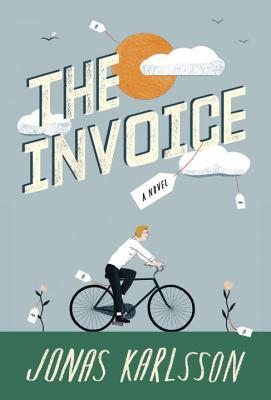
The Invoice by Jonas Karlsson: Review

Friday, July 22, 2016

The Inovice by Jonas Karlsson :: Outlandish Lit Review
The Invoice by Jonas Karlsson
Publisher: Hogarth. July 12, 2016.
Pages: 208
Genre: Literary
Source: Publisher


ADD TO GOODREADS

BUY FROM INDIEBOUND

BUY FROM BOOK DEPOSITORY
A passionate film buff, our hero’s life revolves around his part-time job at a video store, the company of a few precious friends, and a daily routine that more often than not concludes with pizza and movie in his treasured small space in Stockholm. When he receives an astronomical invoice from a random national bureaucratic agency, everything will tumble into madness as he calls the hotline night and day to find out why he is the recipient of the largest bill in the entire country.-Goodreads

This tiny book is so sweet and charming, and that's coming from somebody who thinks horror movies pussyfoot around opportunities to kill off child characters. So it's not cheesy, dopey, or annoying in any way. It was just a very nice time to read. Jonas Karlsson wrote one of my favorite funny books, The Room, and while The Invoice isn't hilarious, it is equally quirky. And equally focused on the ridiculousness of bureaucracy. Karlsson knows what he likes. Or, I guess, hates in this case.

Our unnamed protagonist is confronted with a 5,700,000 Swedish kronor (~658,000 USD) invoice, which he soon learns is the cost of all the happiness he's experienced in his life. Despite being a guy with very little going on in his life -- a part time video store job, no financial responsibilities, little family, one friend -- he has one of the largest bills in the country. We follow him as he tries to find out why his invoice is so enormous. He calls up the agency and speaks with a representative on the phone to try to figure out what happened, and he finds himself getting closer and closer to the woman on the other end.

With some reluctance, I had to admit that I was pretty happy with my life.

This book was a very quick, fun read. At first, our hero seems like a pretty miserable, lazy nobody, but he has a spectacular ability to appreciate the little things in life. As we learn more about the events that have taken place in his life, both the main character and the reader learn a lot about perspective. His capacity for contentment is both admirable and inspiring, at least to somebody like me who is all sorts of restless.

There are some really excellent moments in this book. A couple of them near the end gave me shivers. Some of it felt repetitive, however, and I feel like The Invoice could have stood to be shorter than it was. All in all, though, I had fun reading it.


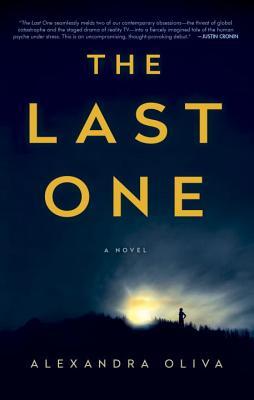
The Last One by Alexandra Oliva: Review

Wednesday, July 13, 2016

The Last One by Alexandra Oliva :: Outlandish Lit Review
The Last One by Alexandra Oliva
Publisher: Ballantine. July 12, 2016.
Pages: 304
Genre: Literary Dystopian Thriller
Source: Publisher


ADD TO GOODREADS

BUY FROM INDIEBOUND

BUY FROM BOOK DEPOSITORY
It begins with a reality TV show. Twelve contestants are sent into the woods to face challenges that will test the limits of their endurance. While they are out there, something terrible happens—but how widespread is the destruction, and has it occurred naturally or is it man-made? Cut off from society, the contestants know nothing of it. When one of them—a young woman the show’s producers call Zoo—stumbles across the devastation, she can imagine only that it is part of the game.

Alone and disoriented, Zoo is heavy with doubt regarding the life—and husband—she left behind, but she refuses to quit. Staggering countless miles across unfamiliar territory, Zoo must summon all her survival skills—and learn new ones as she goes.

But as her emotional and physical reserves dwindle, she grasps that the real world might have been altered in terrifying ways—and her ability to parse the charade will be either her triumph or her undoing.  -Goodreads

I love reality TV. I love it. So obviously when I read the synopsis of debut novel, The Last One, I had no choice but to read it. And it didn't hurt that it was compared to Station Eleven. Zoo joins a show called In The Dark, which offers a million dollar prize to whoever wins. And how do you win? You have to be the last person standing. The only way contestants are disqualified are if they say the phrase "ad tenebras dedi" and opt to quit themselves. None of them have any idea what the show has in store for them.

The book jumps between different perspectives every chapter, which I generally find fun to read, as I did here. Sometimes we have Zoo, our main character's perspective starting mid-show in the midst of the solo challenge. Then we'll have the editor's perspective, which is pretty much just an omniscient look at the show, with some minor Zoo-bias because he seems to favor her, that starts from the beginning of filming. And every once in a while we get to see some Reddit-like comments about the show's episodes. What the viewers find interesting about the show is that it's almost aired live. Episodes air around a week after the events take place. And the show has an ENORMOUS budget. The contestants do all sorts of interesting, staged challenges, but they've always been pretty overtly staged. Once the solo challenge begins, Zoo is able to justify being alone for so long and having so much territory to hike without seeing anybody because this is where the big budget must have gone. Right?

There is not enough to go around--it's a squirrel. But all three are salivating. Do they fight, do they share, what happens next? A commercial break will delay the question's answer. Once viewers return, the answer comes quick and boring: They share.

This novel is about both the lengths a person will go to to survive, and the lengths they'll go to to delude themselves. To try to justify their choices to themselves. And it's especially interesting to look at that in the context of a reality TV show, where everything can be justified because it's part of "the game." That's the trap Zoo falls into as things get worse and worse for her. Attacked by a rabid animal? It must have been a challenge, what does the producer expect her to do? How would the audience expect her to behave? Meet a random guy who talks about a sickness that killed his whole neighborhood? Maybe he's an actor or the cameraman, so she has to act a certain way in response to his story. And this pattern of justifying her behavior parallels how she's dealt with some choices in her real life, in the past and very recently.
I'm used to being dismissed as harmless, but that's because I usually don't cause any harm. Does he think my fighting him was some last gasp of feminist fury, now dissipated? Is this what he needs to believe?
I can work with that.

A little bit of a slow burn, The Last One has a ton of interesting ideas but not really the pacing of a thriller. The challenges aren't quite exciting enough (and for good reason, because it's a super-staged survival show) and Zoo spends a lot of her time alone thinking very repetitive thoughts. I still really wanted to know how it was going to come together, though, and I'm glad I stayed with it. I absolutely raced through the last 100 pages or so as the stakes got higher and some shit went down. The emotional development of Zoo and the slow reveal of her story and her fate had me gasping and tearing up and desperate for more. Many tears were shed at the end, and I'm not going to say what kind they were. You'll have to read and find out if any Latin falls from the mouth of Zoo. And maybe you'll find out what her actual name is too.

So Much for That Winter by Dorthe Nors: Review

Thursday, June 23, 2016

So Much for That Winter by Dorthe Nors
Publisher: Graywolf. June 21, 2016.
Pages: 147
Genre: Literary Fiction
Source: Publisher


ADD TO GOODREADS

BUY FROM INDIEBOUND

BUY FROM BOOK DEPOSITORY
Dorthe Nors follows up her acclaimed story collection Karate Chop with a pair of novellas that playfully chart the aftermath of two very twenty-first-century romances. In "Days," a woman in her late thirties records her life in a series of lists, giving shape to the tumult of her days--one moment she is eating an apple, the next she is on the floor, howling like a dog. As the details accumulate, we experience with her the full range of emotions: anger, loneliness, regret, pain, and also joy, as the lists become a way to understand, connect to, and rebuild her life.
In "Minna Needs Rehearsal Space," a novella told in headlines, an avant-garde musician is dumped via text message. Fleeing the indignity of the breakup and friends who flaunt their achievements in life, career, and family, Minna unfriends people on Facebook, listens to Bach, and reads Ingmar Bergman, then decamps to an island near Sweden, "well suited to mental catharsis."  -Goodreads

Ever since reading her collection of stark short stories, Karate Chop, I've been looking forward to more of Danish author Dorthe Nors' work being translated to English. And So Much for That Winter is beyond exciting, because it's two longer pieces that both specifically highlight the magic that Nors can create in her terse sentence styling. She accomplishes so much while saying so little and it never ceases to stun me. So on to the two novellas that make up this collection (if two of something makes a collections, that is).


MINNA NEEDS REHEARSAL SPACE

Minna and Karin took a class together.
Karin latched onto Minna.
Minna is somewhat of a host species.

First of all, I don't think I've ever related to a sentence more than I have that last one. Anyway, that's beside the point. Minna Needs Rehearsal Space is my favorite of the two novellas -- I loved it. I loved it so much that I feel comfortable saying just read this one, you don't even need to read Days. But more on that later.

Grown-ups are kids who have lots to hide.

This story is written in a series of headlines, because the man who just broke Minna's heart is a reporter. And it's brilliant. It sounds like it would be dull to read, but it's both incredibly readable and it commits extraordinary acts of beauty. Narrator, Minna, breaks modern day life and love into small simplistic bits that will make you laugh and tear up and be amazed at how Nors has managed to capture how it feels to be a human today. Constantly clever and moving, this novella carries a strong plot with memorable (needy, horrible) characters you've most likely seen before in your life.

If you're a fan of Jenny Offill's Dept of Speculation or Edouard Leve's Suicide, seek this one out.

Jette's erotic.
Jette calls her boyfriends lovers.
Jette's boyfriends are married to other women.


DAYS

I love Nors and I want to love everything she ever does and I don't want to say anything bad about any part of So Much for That Winter, but I didn't love Days. Though similarly written, this time in the form of lists, it was the opposite in that it did not feel as compulsively readable. I mean it was easy to read, but I didn't want to read it that badly. The main character is a writer who doesn't actually seem to have a job who is going through some vague struggle and we get to see her day to day actions and thoughts. If at any point I was given a reason to care about the main character, it may have been interesting. But for the most part I was just wondering if I would figure out what was going on and then was disappointed when I didn't really.

1. Woke an hour early
2. made instant coffee, 

3. drank it, 

4. stood by my kitchen window the same way I stood by my kitchen window when I lived on the island of Fanø and went down to the beach every day and crushed razor shells underfoot: Why do I live here? I’d wondered 

5. and couldn’t have known that one day I would stand in a flat in Valby and look at the crooked tulips in the backyard and wonder the same thing.

There are definitely good moments in it. I enjoyed some of the narrator's thoughts. But I also wished the lists could have been focused and actually functioned as lists or had some sort of visible reasoning. But some of the lists, unlike the one shared above, didn't have any sort of verb so it wasn't like a list of each thing she did. I don't know. I was just unclear about the whole thing the whole way through. So much for that novella, right?

Maybe there's something I just didn't pick up on, but I personally recommend Minna Needs Rehearsal Space (luckily the longer of the two) and can give only give a shrug and an "it was ok I guess" to Days.

I think So Much for That Winter is worth getting just for Minna, I feel that strongly about the novella.

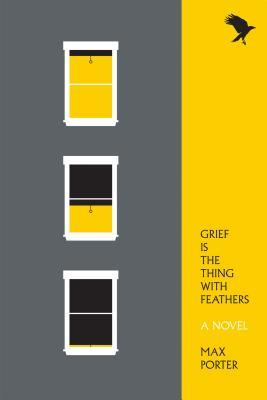
3 Things "Grief Is the Thing with Feathers" Got Right About Grief

Saturday, June 11, 2016

3 Things "Grief Is the Thing with Feathers" Got Right About Grief :: Outlandish Lit's Review
Grief Is the Thing with Feathers
Publisher: Graywolf. June 7, 2016.
Pages: 128
Genre: Literary Fiction
Source: Publisher


ADD TO GOODREADS

BUY FROM INDIEBOUND

BUY FROM BOOK DEPOSITORY
In a London flat, two young boys face the unbearable sadness of their mother's sudden death. Their father, a Ted Hughes scholar and scruffy romantic, imagines a future of well-meaning visitors and emptiness.

In this moment of despair they are visited by Crow - antagonist, trickster, healer, babysitter. This self-described sentimental bird is attracted to the grieving family and threatens to stay until they no longer need him. As weeks turn to months and physical pain of loss gives way to memories, this little unit of three begin to heal. -Goodreads

Without thinking about it, I read Max Porter's debut Grief Is the Thing with Feathers really, really close to Father's Day. For the past 12 years I've been coping with the loss of my father. It's been a long journey of trying to acknowledge it, then trying desperately not to acknowledge it, and eventually trying to find my way back to the experience through writing about it. It's always been something with me, constantly changing me, whether I was willing to accept it or not.

Through its fable-tones, strange format, and fragmented stream-of-consciousness writing (think Dept. of Speculation), this book is the closest I've ever read to capturing the feelings of grief. We get to be in the head of the father, the kids, and the magical Crow who inhabits their home. The death of the mother in this family shifts them into an entirely new world that nobody else can touch.

1. // You're constantly trying to rationalize the loss.

After the advent of laser surgery but before puberty, before self-consciousness, before secondary school, before money, time or gender got their teeth in. Before language was a trap, when it was a maze. Before Dad was a man in the last thirty years of his life. Really, on reflection, the best possible time to lose a mom. - Boys
No, there's no good reason why my dad died when he did. No, not everything happens for a reason. Will that stop me from having pretty much the identical thoughts as Max Porter captured above? Definitely not. So much of the boys behavior parallels that of me and my brother. 

2. // You support your family without even realizing it.
They offer me a space on the sofa next to them and the pain of them being so naturally kind is like appendicitis. I need to double over and hold myself because they are so kind and keep regenerating and recharging their kindness without any input from me. - Dad talking about Boys

I was eleven when my dad died. I was too young for a lot of things. Only now can I look back and try to form an image in my mind of how others were affected by the event. I didn't then see my dad as a person or my mom as a person, really. They were dad and mom. I know now that my mom was going through an incredible hardship. And while she had to be completely overwhelmed with everything going on, including worrying about us, I can only hope that we helped her find joy every once in a while like she did for us during that time. Max Porter does an impeccable job capturing all of the intricacies of being a parent while being a person who just lost the love of their life and their best friend.

3. // It's not something you ever really get over. 

Grief isn't something that ever truly ends. It evolves. And that's ok.


There are so many more things that Porter got right about grief, but those are three that I can articulate.There are things about this book that I only sort of felt like I understood. I feel like I need to go back and critically read basically all of Crow's parts. It would probably help if I had read Sylvia Plath and Ted Hughes. I'm sure there's a ton of stuff I'm missing. But I also enjoyed just letting Porter's beautiful writing flow over me for about an hour and then sobbing like a baby when it was over.

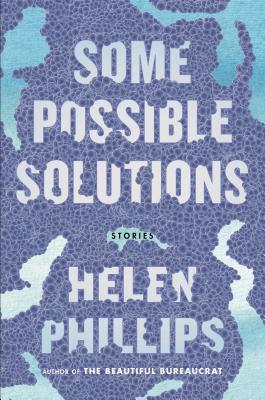
Some Possible Solutions by Helen Phillips: Review + Giveaway

Tuesday, May 31, 2016

Some Possible Solutions by Helen Phillips :: Outlandish Lit's Review + Giveaway
Some Possible Solutions by Helen Phillips
Publisher: Henry Holt. March 31, 2016.
Pages: 224
Genre: Literary Fiction
Source: Publisher


ADD TO GOODREADS

BUY FROM INDIEBOUND

BUY FROM BOOK DEPOSITORY
What if your perfect hermaphrodite match existed on another planet? What if you could suddenly see through everybody's skin to their organs? What if you knew the exact date of your death? What if your city was filled with doppelgangers of you?

Forced to navigate these bizarre scenarios, the characters search for solutions to the problem of how to survive in an irrational, infinitely strange world. In dystopias that are exaggerated versions of the world in which we live, these characters strive for intimacy and struggle to resolve their fraught relationships with each other, with themselves, and with their place in the natural world. We meet a wealthy woman who purchases a high-tech sex toy in the shape of a man, a rowdy, moody crew of college students who resolve the energy crisis, and orphaned twin sisters who work as futuristic strippers--and we see that no one is quite who they appear. -Goodreads

I'm a huge Helen Phillips fan. I'm still obsessed with her debut novel The Beautiful Bureaucrat and constantly find myself recommending it. So you can imagine how excited I was to hear that she had a new collection of short stories coming out. You can count on Phillips for at least a little bit of weirdness in each story she tells, often veering into science fiction territory, and she didn't disappoint in that respect.

Almost all of the stories are sort of dystopian. Characters live in worlds that are slightly different from ours, but worlds that are still believable. Still startling close. Characters yearn for how things used to be and struggle against their new realities. They're mournful and strange, but small bright spots of hope slip in through the cracks of these stories. Almost all of them are heavily relationship or childrearing focused. This isn't really a problem, but I'm both coldhearted and picky. So after a while, the stories started to blend together a little bit and felt borderline one note.

Some Possible Solutions holds some very powerful, strange stories that are going to stay with me forever.  "The Knowers" is the first story and possibly my favorite: people can opt to learn the exact date of their death. We see how that affects a relationship and it's incredible. The writing is tight and gripping, and the ending moved me to tears. "Life Care Center" is autobiographical and heartbreaking. "The Joined" is a fantastic alien tale of finding a planet where each of us Earthlings have a perfect match, and we learn what joining with that match means. "Children" is another great alien story of sorts, where a parent doesn't quite understand her twin children. One of the child-themed stories I actually really liked. And, the powerful final "Contamination Generation" about a man's attempt to make his daughter's life magical in a grim near-future.

He knows better than anyone how they are always talking to each other in a language we don't understand, always putting jam on their hot dogs. They've never belonged to us, not even for a second. - Children

At the same time, there are a lot of stories that I straight up did not understand. And I'm kind of used to not understanding a number of contemporary short stories in a collection. This just got kind of frustrating because I'd read three stories in a row and at the end of each think "Well, there goes another one -- right over my head." Specifically, some that left me confused: "Game", "The Worst", "How I Began to Bleed Again After Six Alarming Months Without." There are definitely more, but I'm giving myself some credit in that I "sort of" got them and was just mildly confused at the end.

Ok, I just went and counted the stories and I wasn't confident about understanding quite literally half of them. I hope for a better ratio when reading, and I don't know if it's the stories or if it's me. A lot of them were missing that dark cleverness that I really appreciated in The Beautiful Bureaucrat and perhaps unfairly expected to find in this collection. Overall it was a fascinating read -- being in Phillips' head always is -- but it did not completely live up to my expectations. 


a Rafflecopter giveaway

Tender by Belinda McKeon: Review

Wednesday, May 25, 2016

Tender by Belinda McKeon :: Outlandish Lit Review
Tender by Belinda McKeon
Publisher: Lee Boudreaux. Feb. 16, 2016.
Pages: 416
Genre: Literary Fiction
Source: Library


ADD TO GOODREADS

BUY FROM INDIEBOUND

BUY FROM BOOK DEPOSITORY
When they meet in Dublin in the late nineties, Catherine and James become close as two friends can be. She is a sheltered college student, he an adventurous, charismatic young artist. In a city brimming with possibilities, he spurs her to take life on with gusto. But as Catherine opens herself to new experiences, James's life becomes a prison; as changed as the new Ireland may be, it is still not a place in which he feels able to truly be himself. Catherine, grateful to James and worried for him, desperately wants to help -- but as time moves on, and as life begins to take the friends in different directions, she discovers that there is a perilously fine line between helping someone and hurting them further. When crisis hits, Catherine finds herself at the mercy of feelings she cannot control, leading her to jeopardize all she holds dear. -Goodreads

This is perhaps the least outlandish book that I could ever review on Outlandish Lit. But it was so amazing, that I can't go on not saying anything about it. It's one of those books that's relatively long, and it's not super plot driven, and it sounds simple up front. But it's a novel that you want to stay in for as long as possible. Tender uses stunning writing and a keen sense of what it is like to be college-aged to create a riveting, close look at a relationship between two people.

We follow shy main character, Catherine, as she grows up in small and large ways in college in the 90's. One of the most important moments in her life is meeting her friends' friend James by chance and becoming his closest friend. Meeting a person can be life changing, and James is for her. He soon comes out to her as gay when Ireland decriminalizes homosexuality. After that, their relationship gets even more intense, complicated, strained, and obsessive in fascinating ways. And then Catherine does something really bad. I have to say, this story is like the most nightmarish conglomeration of embarrassing mistakes I've made and people I loved when I shouldn't have.

And Catherine could not understand where those feelings were coming from; she could not understand why they had such a hold over her, gripping her by the hair it seemed sometimes, clasping her by the throat--but she felt them. She felt alone; or she felt, at least, the threat, the specter, of her aloneness. She felt the panic of his going, and the emptiness with which it would leave her. He was not going anywhere, and yet she felt it.

McKeon's perspective on what going through college as a sheltered girl is so real and so cringe-worthy. There were so many moments where Catherine was like "Well, it's second year and I'm grown up now. Look at all these friends I have and these parties I go to, I am very confident" (not a direct quote) and then moments later we see her actually in the context of these friends/parties and she is just the most strange and awkward human. Catherine is so painfully self-involved and highly emotional, and I related way too hard to her odd, fluctuating self-esteem at that time.

How McKeon shows us around Catherine's mind while her relationship with James gets more and more complicated is masterful. At the beginning of the book, it's a straight forward narrative through Catherine's eyes. But as strain grows between the two characters, the format of the book starts to shift. We start to see abrupt, single thoughts instead as she feels her life is falling apart. Her depression is communicated through seeing how stilted her thoughts are on the page itself. It's something I wasn't expecting, but was delighted by.

Because what had she been up to?
Sleep, as long as it lasted. Which was not--which was never--long enough.
And then the waking. And with it the thinking. Maybe this time it will be different. Maybe this time it will not be so bad.

I don't want to say anything more about what happens in the story. It's a book where it's worth going in blind. Being in Catherine's head can be a nostalgic struggle, but it's worth it for where she takes you in the end. Everything Belinda McKeon captures is true and real and important. I cried. I wish I was still reading this book right now. And this is coming from someone who hates reading about relationships.


In the backyard of Baggot Street, a feral cat close to giving birth. Dragging herself around. The noise of her. Trying, as they watched from the steps, to burrow into a tangle of ivy.
"She's trying to get away from the pain of it," Cillian said. "She doesn't understand it's inside of her."
Catherine stared at him. Could that be true? Could that possibly, possibly, be true?

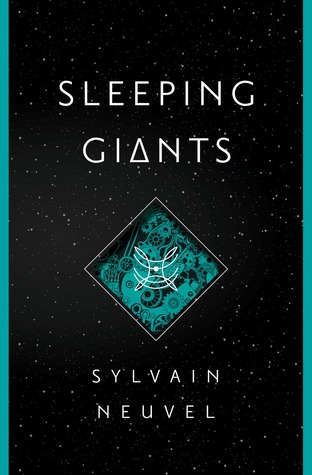
Sleeping Giants by Sylvain Neuvel: Review

Tuesday, April 26, 2016

Sleeping Giants by Sylvain Neuvel :: Outlandish Lit's Review
Sleeping Giants by Sylvain Neuvel
Publisher: Del Rey. April 26, 2016.
Pages: 320
Genre: Science Fiction
Source: Publisher


ADD TO GOODREADS

BUY FROM INDIEBOUND

BUY FROM BOOK DEPOSITORY
A girl named Rose is riding her new bike near her home in Deadwood, South Dakota, when she falls through the earth. She wakes up at the bottom of a square hole, its walls glowing with intricate carvings. But the firemen who come to save her peer down upon something even stranger: a little girl in the palm of a giant metal hand.
Seventeen years later, the mystery of the bizarre artifact remains unsolved—its origins, architects, and purpose unknown. Its carbon dating defies belief; military reports are redacted; theories are floated, then rejected. But some can never stop searching for answers. -Goodreads

Sylvain Neuvel's journey getting this book published is an interesting one. At first nobody was interested in it. He self-published. Then he got a movie deal. After that, Del Rey picked up his trilogy, Sleeping Giants being the first book. MADNESS. This book rings all my bells. Ancient aliens? Check. Lots of prominent female characters? Hell yeah. Interesting format? Interviews and journals only, so definitely.

Don't know what I mean when I say ancient aliens? Then what are you watching on the History channel?? Real history?? Ok, but anyway, it just refers to the idea that a long time ago, aliens either visited or lived on the planet. It's a theory that tries to explain multiple cultures' stories of gods. It's totally not a spoiler to mention them, because the book alludes to it heavily on the back cover and they spell it out for us relatively early in the book. The The Sentinel vibes are intense. I'm going to be really real right now, ancient aliens is not like THE theory that I subscribe to. But I'm just saying if our options are 1. ancient peoples were just bullshitting these stories/they're allegory, 2. gods are real, or 3. aliens visited earth a long time ago and people misinterpreted them as gods... I'd rate them from most to least likely as 1, 3, 2. So I'm not saying that aliens built the pyramids. I'm just saying that I don't think alien visitation is the least likely thing to happen in our universe and that it is an explanation that makes a certain amount of sense.

The reason I'm sharing that is because clearly I've consumed a decent amount of ancient aliens stories/info. Because of that, this story moves pretty typically toward where I would expect it to move. If you're similar, don't expect a lot more going in. If you haven't consumed ancient aliens media or much sci-fi, this book's going to be crazy original! It's such a fascinating concept and Neuvel's interpretation is a lot of fun. Trying to find out what the giant body parts were for was riveting. As new things get discovered, you think you're getting closer to understanding it all, but then something gets thrown in that has you desperate for answers again.

The hole I was in was perfectly square, about the size of our house. The walls were dark and straight with bright, beautiful turquoise light shining out of intricate carvings. There was light coming from out of just about everything around me. I moved my hands around a bit. I was lying on a bed of dirt, rocks, and broken branches. Underneath the debris, the surface was slightly curved, smooth to the touch, and cold, like some type of metal.

This book is a really good time. It's not much more than that, but it doesn't really have to be! Reading Sleeping Giants is like watching an action movie. My main problem, though, is that the interview/journal entry format really does not assist any sort of increase in pace. It's a fun page turner, because it's really quick and easy to read in this format, but we rarely get to be in the middle of the action. I love how many strong female characters there were in high powered positions, but at the same time their complexity was kind of feigned in that they were just stereotypes of complex characters. Like a tough woman who has a troubled past and doesn't trust anyone easily... you know. It was a bit too easy. I'm also so not into the nameless, faceless, emotionless interviewer who inexplicably has a lot of power and knows a lot of things. I just thought he and his dialogue were dorky, but I also don't like secret agent movies, so it could just be me.

If the plot and the ancient aliens idea sounds intriguing to you, I'd urge you to pick it up, just because it's a fun read. Interesting things do happen, I was gasping at some surprises, and I raced through it when I wasn't initially in a reading mood. Neuvel does veer a slightly different direction than some other typical ancient aliens stories. And the book ends with a cliffhanger that has me NEEDING the second book.
I NEED IT.

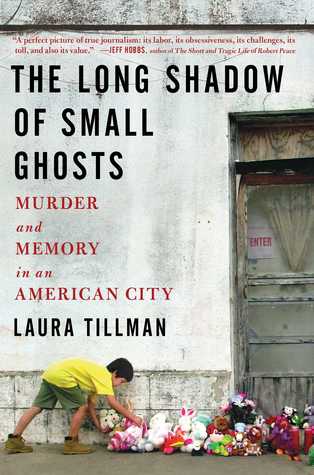
The Long Shadow of Small Ghosts by Laura Tillman: Review

Wednesday, April 13, 2016

The Long Shadow of Small Ghosts by Laura Tillman
Publisher: Scribner. April 5, 2016.
Pages: 256
Genre: Nonfiction
Source: Publisher


ADD TO GOODREADS

BUY FROM INDIEBOUND

BUY FROM BOOK DEPOSITORY
In Cold Blood meets Adrian Nicole LeBlanc’s Random Family: A harrowing, profoundly personal investigation of the causes, effects, and communal toll of a deeply troubling crime—the brutal murder of three young children by their parents in the border city of Brownsville, Texas.
With meticulous attention and stunning compassion, Tillman surveyed those surrounding the crimes, speaking with the lawyers who tried the case, the family’s neighbors and relatives and teachers, even one of the murderers: John Allen Rubio himself, whom she corresponded with for years and ultimately met in person. The result is a brilliant exploration of some of our age’s most important social issues, from poverty to mental illness to the death penalty, and a beautiful, profound meditation on the truly human forces that drive them. It is disturbing, insightful, and mesmerizing in equal measure. -Goodreads

This is a true crime book for people who don't read true crime. If you go in expecting a lot of details about the murder of three children by their parents or the court case, you're going to be disappointed. Rather, this is an unflinching look at class and poverty in America, and some of its subsequent effects on communities. It's like classy true crime with a social justice bent. But there is totally a chapter titled "Don't Read This Chapter before Going to Bed."

We invest dollars and moments in one place over another. We identify the lessons that might be learned by a new generation, celebrate certain leads and achievements, and damn others. And as we forget, we destroy. It is a silent violence.

Tillman's journey started as she reported on a building that people wanted torn down. The building where three children were killed by John Allen Rubio and their mother Angela. Tillman looks at both the poverty and the sense of community in Brownsville, Texas which is on the very southernmost point of the state. In this border town, drugs are a problem and so is unchecked mental illness. Rubio claims that they killed their children because he believed they were possessed by demons. It's dark and it's complicated. So Tillman starts to talk to Rubio in prison to hear how he speaks about the situation, and eventually she meets him in person. No perspective that could be taken on this crime is left unresearched. And Tillman's writing is so good, and she's so excellent on honing in on what's important, that we're not left with a bloated, dense piece of detail-heavy work. I'm not good at reading nonfiction, but this book was impossible to put down. Definitely a page-turner.

This book doesn't try to answer questions for us. It doesn't break down the crime and explain exactly what happened and why. It shows us the grey areas. The grey areas in why this horrific crime took place. How multiple internal and external forces could have led to this event, and events like it throughout the country. In addition to asking us to look at a murderer as a constantly changing human being, it asks us what we're going to do about it. When somebody is sentenced to death, who is responsible and what does it mean?

I hadn't thought that much about the death penalty before, at least not critically. I knew I should think about it. I knew that I felt pretty against it, but I hadn't looked at the why's of that feeling. I'm grateful that Tillman went to the extent of actually talking to a reporter who has seen 400+ executions. It gave me a whole lot to think about in regards to the reality of the situation that I hadn't thought of before. Like how the execution is "an intentional death of a healthy person made to look more like the mercy killing of a sick dog or cat." And how there are witnesses to the execution, and the family of the victim often feel disillusionment toward the experience. It's a lot to take in, and it's important to take in.

...Acts do not exist in isolation in our world, and we can't expect to repair the misconduct of the past tidily, believing our response to be contained. We are connected--invisibly, intricately, marvelously, tragically--and those connections cannot be willed away. It would be satisfyingly simple to see an act as abominable as murder cured or avenged by putting the perpetrator of that crime to death. But the killings continue. They amp up--into school shootings, terrorist acts, war that rage for decades. The question is whether one death addresses another, or whether they circle into a frenzy.

Tillman does an excellent job at presenting many different arguments (about the death penalty, and about other things). She doesn't taint or rework them with her own opinion. She just offers her own incredibly intelligent questions and thoughts after the fact. I swear, I just wanted to type up entire paragraphs of this book in place of a review. The Long Shadow of Small Ghosts urged me to be more thoughtful, analytical, and open to accepting the grey areas.


One Day Soon Time Will Have No Place Left to Hide by Christian Kiefer: Review

Tuesday, March 22, 2016

One Day Soon Time Will Have No Place Left To Hide by Christian Kiefer: Outlandish Lit's Book ReviewOne Day Soon Time Will Have No Place Left to Hide by Christian Kiefer
Publisher: Nouvella. March 22, 2016.
Pages: 193
Genre: Literary fiction
Source: Publisher


ADD TO GOODREADS

BUY FROM NOUVELLA

BUY FROM BOOK DEPOSITORY
Renowned installation artist Frank Poole has embarked on his most ambitious project to date: an entire housing subdivision in the desert of Nevada, with every element painted stark white. By his side is his young wife Caitlin, his manager and confidante who keeps the volatile artist functioning from day to day. But as Frank grows increasingly anxious about his undertaking, Caitlin learns she is pregnant and begins to wonder what the future might hold for them both. -Goodreads


Let us be clear.
The time you spend reading these words
will not be returned.

Can we give a shout out to the best opening lines ever written? Luckily, the rest of this novella is about as bold as those first two sentences that confront you before the story begins. I was at first startled by the format of this delightfully sized little book, but soon came to fall in love with it. The whole thing is like a transcript of a documentary. Sort of. It's a transcript of a documentary, and yet it doesn't feel dry. It's lyrical, though sparsely written. Kiefer's writing first impressed me in The Animals and it didn't fail to impress me here. Every once in a while, the book references you as the viewer, or one of the characters looks at you/the camera. I wholly felt as if I were watching humans the entire time, so this experimental format was a success.

The story was at once intriguing. An artist, Frank Poole, who creates huge installations (like a replica of a Starbucks in a strip mall that is forever locked) begins work on his largest-scale project yet. In this project, he attempts to capture perfect moments in time through creating an entire,  completely and perpetually sealed off neighborhood in the middle of the desert; all painted white.

As his project gets more difficult and unwieldy, we learn more about Frank and his dysfunctional childhood through interview. We also learn more about his young wife and manager, Caitlin, who gave up her own artistic dreams and is now pregnant. The experimental format and Kiefer's beautiful writing lend to some really visual scenes that show us important things about their relationship and Frank's worsening struggle with his project and life.

The novella is chock-full of poignant vignettes and bits of dialogue, but I'm still unsure about the ending. I actually ended up rereading most of the book to see if I was missing something. I liked it, but it felt a little too easy. I would love to hear what anybody else thought of it.

Overall, this is a good pick for the Weirdathon if you're looking for an experimental format. It's easily a book you can finish in one sitting. 


P. S. The book cover is beautiful and you can only see the title at very specific angles, making it frustrating to photograph, but a delight to hold and look at.


Share

Related Posts Plugin for WordPress, Blogger...